Yearly Archives: 2011

"Can a leopard change its spots?"


Rhetorical questions get right up my nose. [Just for fun, notice how many RQs I sneak into this post, and how annoying they are.] This famous RQ is from the Old Testament prophet Jeramiah [13:23], who prefaces his animal metaphor with what these days would be called a racial slur: “Can the Ethiopian change his skin?” In both cases, one might be moved to reply, “Why would he even want to [change]?” [Jeramiah’s answer would be, to avoid the destruction of Solomon’s temple, silly! Go read his whole sarcastic, “Now you’ve gone and done it, and you’re gonna get it!” rant for yourself, if this isn’t ringing any distant bells from your Judeo-Christian-Islamic upbringing.]

Ever since I was assigned my first patient in 1971, the leopard-spot-changing question has dogged me. [Remember this variation on the theme of an old joke? Q:”How many psychotherapists does it take to change a lightbulb?” A:”Just one; but the lightbulb has to really want to change.”] Apparently, I’m not the only one who feels a little bit defensive about the efficacy of The Talking Cure. In this month’s issue of The California Psychologist, there’s an article with the subheading, “Psychotherapy is Effective!” Here’s what various cited outcome studies have “shown” it can do: “provide symptom relief and personality change, prevent future symptomatic episodes, enhance quality of life, promote adaptive functioning in work/school and relationships, [and/or] increase the likelihood of making healthy and satisfying life choices.” Not to mention buying a little time, when your colleagues, constituents & the media are baying for your blood. Nar’mean?

How do you suppose most of these studies determine whether the desired outcome has been achieved? Why, by self-report questionnaires, mostly. “After 10 sessions, I can definitely see my spots fading!” Got any methodological problems with that? Remember the principle of Cognitive Dissonance? [The more Therbligs/money/effort you invest in achieving a goal, the more likely you are to believe that you achieved it.] That’s why, explained our grad school profs, “no-cost” psychotherapy hardly ever “works.” “Charge ’em at least fifty cents, if you want ’em to change,” they advised. [The APA Ethics Committee is constantly chasing its tail, as to whether barter is a therapeutic form payment. “Taking it out in trade” (as the lewd British euphemism has it), is definitely not, and is punishable by loss of license to practice.]

But, even if a paying leopard really wants to change its spots, can it? How much of brain function is “hard-wired” [as neuro-scientists used to like to say], and how much is “plastic” [as they like to say, these days]? Turns out, the more the patient and the therapist believe in the plasticity of brain function, “the more positive change is observed.” Even if they insist on calling it “rewiring.”

These days, I regard “a good therapeutic outcome” as “changing a leopard into a snow leopard.”

And I hate RQs because they are at best intrusive [a big waste of time, since they promise an answer which they don’t deliver], and at worst humiliating [since, like Jeramiah, they imply, “Schmuck, you should know this already!”].

Leave a comment

Filed under gets right up my nose, murky research, pragmatics, therbligs

Who’s Got Your Back?


While watching Wimbledon tennis on telly with the sound muted, I’m listening to Radio Wimbledon, which provides commentary on all the matches [from Center Court to Court 14], as well as traffic, transport & weather advisories for those in the stands. If you’re in SW19, Radio Wimbledon’s got your back. As young girls in the 60s, clutching General Admissions tickets to the grounds and CheapDayReturn train tickets back to our town, my sister & I had each other’s backs, too, minding the time to make sure we had enough of it to hoof it back to Wimbledon Station and get our tickets punched by the Station Master before rush hour [when our CheapDayReturns expired]. All this, without the aid of Radio Wimbledon, cellphones, debit cards, or even wristwatches! What a team we made.

We still do. The British relationship therapist, Dr. Sue Johnson, quotes “a traditional Irish saying” [although I can’t find it in any of my aphorism reference sources] thus: “We stand in the shelter of one another.” Or, if we are gazelles @ the LA zoo, we lie down in the shelter of one another. If Chris had used a wider-angle lens, you could have seen a spindly-legged baby gazelle, toddling around under the vigilant gaze of these 3 “lifeguards,” all of whom had its back.

Ah! It’s soothing, just to see them. No, really. Watching a cohort of furry creatures tend & defend their vulnerable members has been shown [in those studies I’m not wild about, for ethical reasons] to lower cortisol, not just in the creatures themselves, but in the observer. [Except maybe not in would-be predators, like those leopards from the previous post, who chunter to themselves, “Curses! Foiled again!”]

The Radio Wimbledon commentators make frequent reference to each contestant’s looking up to the Player’s Box where their entourage of “lifeguards” [coaches, family, friends] are sitting, “seeking their sympathy, or approval, or their righteous indignation at a bad line call.” The exchanges are all done non-verbally, but sometimes with operatic intensity. Unfortunately, when members of a player’s cohort see themselves on a telly camera [via the Jumbotron], they tend to stiffen up, cast their eyes down, and leave their vulnerable Young One momentarily undefended. That’s why it’s heartening to hear the radio accounts [or to be there in person, to see the authentic exchange of give-a-damn looks]. As my favorite Radio 1 Scottish DJ, Edith Bowman, says, wherever in the world Andy Murray is playing, she is listening, “Willin’ him on, just willin’ him on!”

Such fan support helps the player [if he or she is aware of it, and our Andy is a keen Twitterer]; but it also helps the sports fan. Remember the truth about oxytocin? It makes you want to tend & defend those in your reference group, but not the opponent. Nar’mean?

Leave a comment

Filed under reference group, stress and cortisol, zero-sum-gaming

"Don’t Sit Down ‘Cause I’ve Moved Your Chair"


In the latest issue of Spin magazine, Arctic Monkeys frontman Alex Turner explains how a song was “born”: “We were in the studio and I pulled someone’s chair out.”

Do ya see, now, he was trying to circumvent Gestalt psychologist Edward Tolman’s Expectancy Effect, defined in The Dictionary of Psychology [ed. Ray Corsini, 2002] thus: “a tendency for an expectation to cloud a person’s ability to observe or reason, that may lead to an error or bias in the direction in which the person expected the results to go.” Or, to apply Occam’s Razor, we are all creatures of habit. We expect a chair to be where it usually is.

When I say “all,” I include Tolman’s lab rats, who were trained to run a maze, at the end of which they had come to expect a High-Value Treat. When the fiendish experimenter substituted a Treat of Lesser Value, “the rats displayed disgust.”

There is a British idiom, “Sick as a parrot!” Maybe its corollary could be, “Disgusted as a rat!”

The Expectancy Effect does not always result in disgust [or a pratfall from sitting down where a chair no longer is]. Sometimes it causes a better-than-it-really-is distortion [called a Positive Halo Effect in Educational Psychology, where certain students are given the benefit of the doubt & inflated scores, while others (under a Negative Halo) are expected to do badly & downgraded accordingly].

Get this, from yesterday’s London Evening Standard. A man [who had recently quit taking his meds] fatally stabbed a perfect stranger in the street, because he “mistook him for a Zombie.” See? If you’re expecting Zombies, you’re likely to “see” them everywhere.

Oh, come on. Who hasn’t done it? Your beloved black cat has died, and now every dark sweater or towel, glimpsed out of the corner of your eye, “is Midnight!” It’s only delusional if you open a fresh can of FancyFeast for “him.” In certain cultures, not even then.

Returning to the Zombie hunter example, hands up if you expect all rich Frenchmen [or rich Italians, for that matter] to be lechers. Or all mothers to be paragons of virtue.

Oopsie daisy! It ain’t necessarily so. Rules of thumb concerning human nature, like chairs, are subject to change without prior notification.

Leave a comment

Filed under aggression happens, attribution theory

What’s your point?


Lately I’ve been asking the “What’s up my nose?” question about an insidiously lovely song by Ed Sheeran [currently #3 on the BBC 1 chart] called, innocuously enough, “The A Team.” As the [you should excuse the expression under the circumstances] “addictively” catchy lyrics clarify repeatedly, it is the “Class A team” to which the heroine/victim in the song belongs [meaning that she is fatally attracted to drugs classified in the UK as Class A, such as crack cocaine]. I badgered my visiting 20-something daughter about 2 aspects of this song. Why, when it seems to glamorize, without irony, lethal drug abuse, is it so popular? [Because it’s beautifully written, played & sung.Very few listeners downloading the song are thinking critically about its message.] And why, when such glamorization is as old as the opera La Boheme [and its current iteration Rent], does it make me so angry? As it happens, I was doing all this heavy “wolf-work” a week before Amy Winehouse’s untimely death.

Before I deconstruct my “issues” with Ed Sheeran, let me draw your attention to an editorial in yesterday’s NYTimes, entitled “Addictive Personality? You Might be a Leader,” by David J. Linden, “Professor of neuroscience @ Johns Hopkins University School of Medicine and the author of The Compass of Pleasure: How Our Brains Make Fatty Foods,Orgasm, Exercise, Marijuana, Generosity, Vodka, Learning, and Gambling Feel So Good.” [2 fun facts about the author & then my critique of his research: before joining the Johns Hopkins faculty, he worked for Big Pharma; and his father is a high-profile “shrink to the stars” in Santa Monica, CA.] The burden of his argument, taken from the animal & human research of others [some of it, decades old], is that “addicts want their pleasures more but like them less.” This he attributes to “blunted dopamine receptor variants” in these individuals.

Point of order. As its title suggests, this is a very informally written Pop Psych book [not a peer-reviewed journal article]. How large was his human sample size? In the NYTimes, he cites mostly anecdotal evidence concerning famous dead guys [such as Baudelaire, Aldous Huxley, Winston Churchill, and Otto von Bismarck]. How do we know that these “I can’t get no-o satisfaction” folks are actually getting less satisfaction from their “cocaine, heroin, nicotine or alcohol” than their peers are? Just guessing, here: he asked them? [Or the researchers who actually carried out the studies did.] And the addicts said [in a variant of the old Irish joke], “This blow is terrible, and there’s not enough of it!”

And don’t even get me started on Theory of the Mind, which posits that we can never truly know another individual’s experience, so how can we possibly know that we liked the drug less than the Man on the Surbiton Omnibus [British legal term of art for “the average guy”] did?

Is the circularity of Linden’s argument making you dizzy yet? If you are an addict, there’s something wrong with your dopamine receptors. [Not your fault, you poor victim.] To quote one of my favorite famous dead guys, the comic novelist Evelyn Waugh [who wrote brilliantly about alcoholism in Brideshead Revisited], “your brains is all anyhow.”


Is this supposed to mean that everyone with this genetic variant is doomed to substance addiction? Back in the 70s there was a controversial theory that sought to “explain” [excuse?] alcoholism as the result of a genetic variant that metabolizes ethanol in the [poor victim’s] brain more slowly than in your man on the Surbiton omnibus’ brain, storing it as a morphine-like substance. [Thus, alcohol addiction was actually morphine addiction; and we all know how to “cure” that, right?] Studies suggested the prevalence of this gene variant in certain ethnic populations [such as my own, the Irish]. It’s not our fault! We’ve got a disease, innit? What? Like an allergy? Like a peanut allergy? Jeez! Well then, let’s just avoid peanuts. Or, mutatis mutandis, alcohol.

What’s my point? What’s up my nose, about Messrs. Sheeran & Linden? The fear, that by ceding locus of control over what we choose to ingest [by mouth, nose, or vein] to an “accident” of our brain physiology, we are condemned to fulfill the dark prophecy that “anatomy is destiny.” The humiliation, that we have no option but to follow our noses to the irresistible substances that we crave, even though they will [glamorously or sordidly] kill us.

As the Brits would say, “Blow that for a game of soldiers!”

Leave a comment

Filed under confounds, gets right up my nose, locus of control, murky research

Wolverhampton Wolves


I refer not to that ancient city’s alliteratively nicknamed football club [officially, the Wanderers], but to the flash-mob packs of masked looters and arsonists, who are the subject of my contempt, yet also of my attempt to understand what on earth has got up their noses this week.

That sociological sage [and, allegedly, appalling father] John Phillips, late of The Mamas and the Papas, wrote these lyrics to “Safe In My Garden” (1968), concerning the rioting youth of that era: “Could it be we were hot-wired? Late one night; we’re very tired. They stole our minds and thought we’d never know it. With a bottle in each hand; too late to try to understand. We don’t care where it lands–we just throw it. When you go out in the street, so many hassles with the heat [hippie slang for the police]; no one there can fill your desire. Cops out with the megaphones, telling people stay inside their homes. Man, can’t they see the world’s on fire?”

The riots he was describing ostensibly arose from the twin “root causes” of an unpopular war [Vietnam] and racial injustice in 20th Century America; yet he posits a very 21st Century “spark” that ignited that summer of burning cities: some kind of subliminal, electronically-mediated GroupThink, that robbed young people of their individual will and transformed them into the mobile vulgus [the wandering mob], wreaking seemingly random havoc, but not getting much satisfaction from it. Pretty prescient, for a guy who died in the Spring of 2001, no?

Many of this week’s unrepentant pillagers, when asked by BBC reporters, what got up their noses to provoke such displays of rage, answered, “It’s a Class War, innit? We’ve got nuffink, so we’re takin’ it from the rich, nar’mean?” Mind you, they all seemed to own Blackberries, on which they BBM’d {“hot-wired”?] each other the list of successive targets, most of which were modest “mom & pop” shops owned by Sikhs & Hindus [not by “rich snobs,” as one boy put it]. So, why the disconnect between the looters’ Robin Hood myth of robbing the rich, and the reality of their robbing the barely-making-ends-meet South Asian shopkeepers?

Well, [pace The News of the World] I blame the UK’s gutter press, of which The Daily Mail is the prime surviving example, whose narrative subtext is “Everyone we photograph is richer, luckier, and more powerful than you, Dear Reader. Envy them. Feel humiliated by them. Cut them down to size, if you get the chance.” That’s right. I blame the media for the mayhem that continues to spread throughout England tonight, perpetrated not by “werewolves” [who spend the daylight hours adhering to the social norms] but by packs of wolfish youths [boys and girls] who declared proudly to daytime reporters, “No snobby cop’s going to tell us what to do!”
Yeah, right. But the cynical editors of The Daily Mail and their ilk are profiting from your shenanigans. Their motto is: “Long live the Class War! [Let’s hope there are still some corner shops left tomorrow, to sell our Schadenfreude.]”

Leave a comment

Filed under aggression happens, attribution theory, understanding shenanigans

Hide or Seek?


When you find yourself in times of trouble (you know, terrorist attacks, earthquakes, hurricanes, floods, extended power outages), do you want to hide under the covers until it’s over, or seek out the company of others? One day in 1975, while sitting in the back row of an American Airlines jet out of LaGuardia, I had a great view of the port-side engine exploding on take-off. The laid-back voice of the pilot came on, drawling, “Now, folks, those of you on the lefthand side of the aircraft might have noticed a loud bang and some sparks coming out of the engine just now. We’ve shut it down, and we’ll be circling Long Island Sound for a little while, before returning to LaGuardia Airport. We regret any inconvenience this might cause y’all.”

Naturally, I took this as my cue to begin cracking wise to my fellow back row passengers, in an effort to provide a little comic relief and team-building. Trust me, I was hilarious; but did any one of them make eye contact, smile, or even lift their shoulders in the Phatic, “I know, right?” gesture signifying “I heard you, but I don’t want to get into it right now”? Nary a one. The young man next to me was underlining his textbook so intensely, that his pen tore the page. Others literally pulled their blankets (remember airline blankets?) over their heads for the duration of our half hour flight, back to a foamed runway flanked with a contingent of firetrucks. You know when a stand-up comic is losing the crowd and asks, “Anyone here from out-of-town?” I figured these stiffs were all just visiting from Cincinnati (the flight’s putative destination), since no self-respecting group of New Yorkers could have resisted my schtick. They would have joined my improv and tried to top my gallows humor with their own zingers, ya know?

It’s easy to guess what was up their noses, though, right? Fear of crashing; and, who’d a thunk it, the intrusion of my banter into their silent recitation of the Act of Contrition (or whatever).
I, on the other hand was feeling humiliation, that my attempts to Find the Funny in the situation were Not Well Received; and the pain & suffering of feeling All Alone.

That’s what’s so sad about last week’s contretemps with Billie Joe Armstrong on Southwest. The airline whose best feature had been its cabin crews’ ability to Find the Funny in every situation, and transform nervous strangers into a jolly group of Fellow Travelers, became known as the Uptight Enforcers of a Strict Dress Code (No Saggy Pants Allowed). What a somber little half hour flight from Oakland to Burbank that must have been, after the obstreperous Greenday frontman was frog-marched off the plane. Did any remaining passenger have the moxie to crack wise to his fellow row-mates, I wonder, or did they all just hide themselves away in their paperbacks and iPods?

Good thing the fuselage of that plane didn’t deconstruct like a sardine can, right? (Or a wild goose wasn’t sucked into the left engine, as happened to us, back in 1975.) It would have been every man for himself.

Leave a comment

Filed under comic relief, gets right up my nose, reference group

Never the Same Woods Twice


Or maybe it is? Pre-Socratic philosophers started debating this point around 500 BC. Heraclitis may (or may not) have said “Panta rhei” [“Everything changes (or, possibly, flows)”], famously declaring that one could never dip one’s toe into the same stream twice. Pamenides, on the other hand, was an early conservation-of-matter guy, declaring “Change is impossible.” There is nothing new under the sun. [Not even the sun.] Wade Lassister set this idea to music in the finale of the 1980 musical & film, Fame: “I sing the body electric (a line lifted directly from Leaves of Grass). I celebrate the me yet to come. I toast to my own reunion, when I become one with the sun.” The song ends cute with the astrophysical & show biz prediction, “and in time, and in time, we will all be stars.”

It’s still a hot topic for Presidential candidates, whether the Earth’s climate is actually, irreversibly changing, or just going through what David Bowie might call one of its cyclical “Ch-ch-changes.” If only we were French, and could simply finesse the argument with a bon mot: “Plus ca change, plus c’est le meme chose.”

For a while this summer, every walk in the woods lent support to what Parmenides termed dismissively “the mistaken opinion that things had changed.” In the wake of the earthquake, and tropical storms, many mighty trees had fallen. Some of them, eerily, days later. [Thank goodness for Lili, the “timberwolf,” who in the past has given me a “heads up” of falling lumber, and so allayed my fear of being poleaxed.]

But falling trees have not been the only hazard on our woodland walks this summer. A few weeks ago we were assailed by an unleashed, Hound-of-the-Baskervilles-type dog, who came growling and charging at us, leaving its (oblivious? psychopathic?) master far behind. It was fear that got up my nose, but Lili might have been merely affronted by the intrusion. In the melee of snarls & skirmishes that ensued, I was dragged off my feet (not once, but twice), in an attempt to keep hold of Lili’s leash. Only when I was on the ground the second time, did the other owner speak. “I’ll call my dog, and he’ll follow me,” he said. By now, my humiliation and pain & suffering had banished all Japanese commands from my consciousness, and I was reduced to shouting “God damn it!” to all and sundry. I can vouch for the efficacy of swearing as an analgesic, though [see “Why Keep a Dog & Bark Yourself?”]. On the wings of my adrenaline, we flew through the woods in record time; and only later at home, when the bruises “bloomed,” did I realize that I could have been seriously injured.

Since then, I have “played Backgammon” with the incident, revisiting it in my mind, trying to figure out what would have been a better “Not your victim, not your enemy” response to the situation, to make it stop haunting me. In retrospect, I decided I should have told the owner to grab hold of his dog. [Nar’mean?] I should also have taken off my over-the-shoulder European leash and held it in both hands, for better leverage. Every time I’ve seen his telltale Range Rover illegally parked at the entrance to the woods (where are the police when you want them?), I have rehearsed my “flame-out chart” what-to-do list, ready for action.

Yesterday was the rematch. This time, the owner was strolling even farther behind his snarling, charging dog. Initially, I commanded Lili [in our Japanese code] to “lie down” and “stay”; but when the other dog made aggressive contact, I realized our power subtext was “lame gazelle,” so I just held onto Lili’s leash as she barked and lunged. This time I yelled, “Do you have a leash?” No reply. Eventually, the owner called “Skipper” a few times, and reluctantly the dog left the fray and headed back to its master, only to turn around and make a second sortie. This time I shouted, “Do you have a leash?” until he beckoned Skipper again, and they proceeded on their way.

So, that was my Parmenidian moment: “Nothing changes. You can try to rewrite the script, but you’ll still end up looking (and sounding) like a shrill, histrionic loser who can’t take the heat, while the smug thug with the flash car and the free-range dog looks like a winner.”

Ah, but was it a complete rerun? At least this time I didn’t fall down and get dragged like a rodeo clown; and I communicated clearly that the guy should have put his dog on a leash [which is both the custom and the law in these woods]. So, encouraged, we forged ahead with our walk.

Just as we were cresting the hill where the mid-summer fracas had occurred, I made out the outlines of a tall man and a large dog approaching. But I took the Heraclitian view, that these two were not my old nemeses, that each man/dog encounter was “a different stream,” and that things might turn out differently for us this time. So I put Lili at a “down/stay,” ensuring her compliance by stepping on the leash to keep her there. A totally different man, with a Cockney accent and a huge black lab on a chain, smiled as they passed peaceably by, and said, “I do that, too. I put my foot on the lead sometimes, for more control.”

Heraclitis was right! It’s never the same woods twice.

Leave a comment

Filed under attribution theory, gets right up my nose, power subtext

"Lean Toward the Sunny Side, but Don’t Overdo It"


Readers of this blog might expect this to be a post dissing the latest article from the Science section of the NYTimes, but no! This is the title of an inane article from the Business section [of the NYT], from September 23rd, so there. Its author, Alina Tugend, has combined a 2007 article by Profs. Puri & Robinson of Duke Business School, with Positive Psychologist Martin Seligman’s 1995 book, The Optimistic Child, adding contradictory [undated] “findings” from Prof. Sweeny of UC-Riverside and Prof. Phelps of NYU, to make rather a dog’s dinner of the topic, The Efficacy of Optimism. Her high-concept title says it all. Her experts would all [probably] agree, that [to use her own metaphor] being a bit more like Winnie-the-Pooh than like Eeyore [more optimistic than pessimistic] is often [not always] a better strategy for success [at least, in financial affairs, getting hired & promoted, and in managing stress while waiting for test results, whether academic or medical]. She has the grace to point out that all the research she cites was published long before our current all-bets-are-off economic predicament.

Quibbles about murky research and comparing apples to oranges, aside, she kinda has a point.

The Duke biz-whizzes were trying to say that both wild optimism and profound pessimism often result in an individual’s doing a whole lot of nothing: the Pooh bears, because everything will be all right anyway; and the Eeyores, because no personal effort will make things turn out all right anyway. One could say that both character types manifest external locus of control. Enter a more resilient character [Who, Piglet? Or maybe Tigger because of his bounces…], who is Cautiously Optimistic. He believes that most circumstances are temporary, not permanent (Where have you heard that before?), and that his personal efforts might affect them, thus manifesting internal locus of control. This character is willing to expend Therbligs galore, in the guarded hope of Good Outcome. He knows that Life offers no guarantees of success, but he likes his odds.

This weekend, we flew up to Boston to watch our elder daughter expend Therbligs galore, in her first ever half-marathon. Since her previous sporting triumphs have involved rowing boats over water and riding horses over fences, she and we were Not Sure of the Outcome. Her stated goal was to avoid being scooped up by one of the “Lame Gazelle” wagons that hounded the back of the pack of 7000 runners. My secret goals were that she avoid humiliation [however she chose to define it], and that she not incur an injury resulting in chronic pain & suffering. To counter my fear, I willed myself into a mindset of Cautious Optimism.

And it worked! My biggest challenge, as we scuttled from the 3-mile point to the 7-mile point, was the intrusion of desperately needing a restroom [which a kindly native informed me I would find at the boathouse in the park]. By the time we had found a legal parking spot (What are the odds?) on a side street not far from to the Zoo, just in time to see her make her way down the home stretch into the stadium, we were all in floods of joyful tears.

Meanwhile, remember Ruth [our spindly 21-y.o. Maine Coon]? Having spent the last few years as a howling Banshee on the top floor of our house (like a feline Mrs. Rochester from Jane Eyre), she has decided to venture down (into the realm of the Big Dog), just Looking for Some Touch, which I am giving her every few minutes, as I type this blog. Somewhere in that tiny cat brain, the fear of the dog is trumped by the Need for Affection; and with Cautious Optimism, she expends the Therbligs to get her arthritic 5-pound body downstairs and onto the couch, where purring (not howling) ensues.

Leave a comment

Filed under locus of control, murky research, therbligs

Throwing Shade


Talk about humiliating! What kind of music have I been listening to for the last 15 years, that I missed out on the idiom, “to throw shade”? Well, obviously, not to Li’l Kim (nee Kimberly Denise Jones), the Bed/Stuy (Brooklyn) rapper, whose 1996 hit “Crush On You” contains the lyric, “I’ma throw shade if I don’t get paid.” Back in the day, the only American rapper I cared about was Eminem [for the arbitrary reason that his hometown, Sterling Heights (Michigan), is where we stabled our horses, Dusk & Owen].

These days I am obsessed with UK rappers, but mostly guys, as heard on BBC Radio 1.

Anyway, the phrase was being bandied about in the middle of the night this weekend, by “tired & emotional” [a euphemism used in the UK press, to avoid libel actions] young people, who couldn’t clarify its meaning just then. “Is it a good thing, or a bad thing, to ‘throw shade’?” I kept asking, to no avail. For the rest of you tragically un-hip, I can now inform you [according to the Urban Dictionary], it’s a bad thing, similar to dissing someone. As to its derivation, their guess is that it comes from that old expression, “to put someone in the shade.” [To outshine them, with one’s wonderfulness.] As used on the Night in Question, I would speculate that it could be a corruption of the German word, Schadenfreude [joy in another’s shame], which (though actually pronounced “shodden froy-deh”) might be transliterated “fro da shade.” [Nar-mean? “Throw the shade,” innit?]

So, who is likely to “throw (da) shade,” and why? Well, duh! Individuals who feel dissed, themselves, are gonna want to diss the disser back, in retaliation. Or…should the disser be unavailable [or too dangerous to diss directly], a proxy target of our aggression [cuz, let’s face it, a diss is an act of aggression] may be substituted. A small example from last week comes to mind. Ruth, the Maine Coon, has made bold [in her 21st year] to usurp the couch pillow [next to me, as I type this] from the erstwhile Top Cat, Zanzibar. She was ruling this roost when Zanzibar came up to roust her [or at least share the spot with her]. The couch is big. They’re small. All 3 cats plus Lili could fit on it easily, with room to spare for a blogger. But Ruth was having none of it. She blasted young Zanzibar with a sustained, foul-smelling hiss [a clear diss], until he backed off, pivoted, and smacked sleeping Lili upside the head with his paw [an act of displaced aggression]. Since Lili is besotted with Zanzibar, she did not appear to feel dissed [perhaps, mistook his bop for a love pat], and, in the event, she did not retaliate.

As noted in previous posts, a diss is often in the eye of the beholder. Think of the last time you felt humiliated by the basking of another in the [often arbitrary] limelight of fame, fortune or admiration, while you have been toiling, thanklessly, in the shadows. Gets right up your nose, nar’mean? A former patient of mine described being on the losing end of Fate’s Wheel of Fortune as, “An existential smack on the snout.” It makes you [or me, at least] want to howl, “Das ist nicht FAIR!” like the Clever Dogs of Austria.

I say, first do the Wolfwork of admitting how angry the [implied or in-your-face] diss makes you feel. Then, try to resist passing on the pain by dissing an innocent proxy [a sleeping dog], rather than the actual source of your humiliation [Ruth]. If possible, throw shade so subtly that you don’t get into trouble for it.

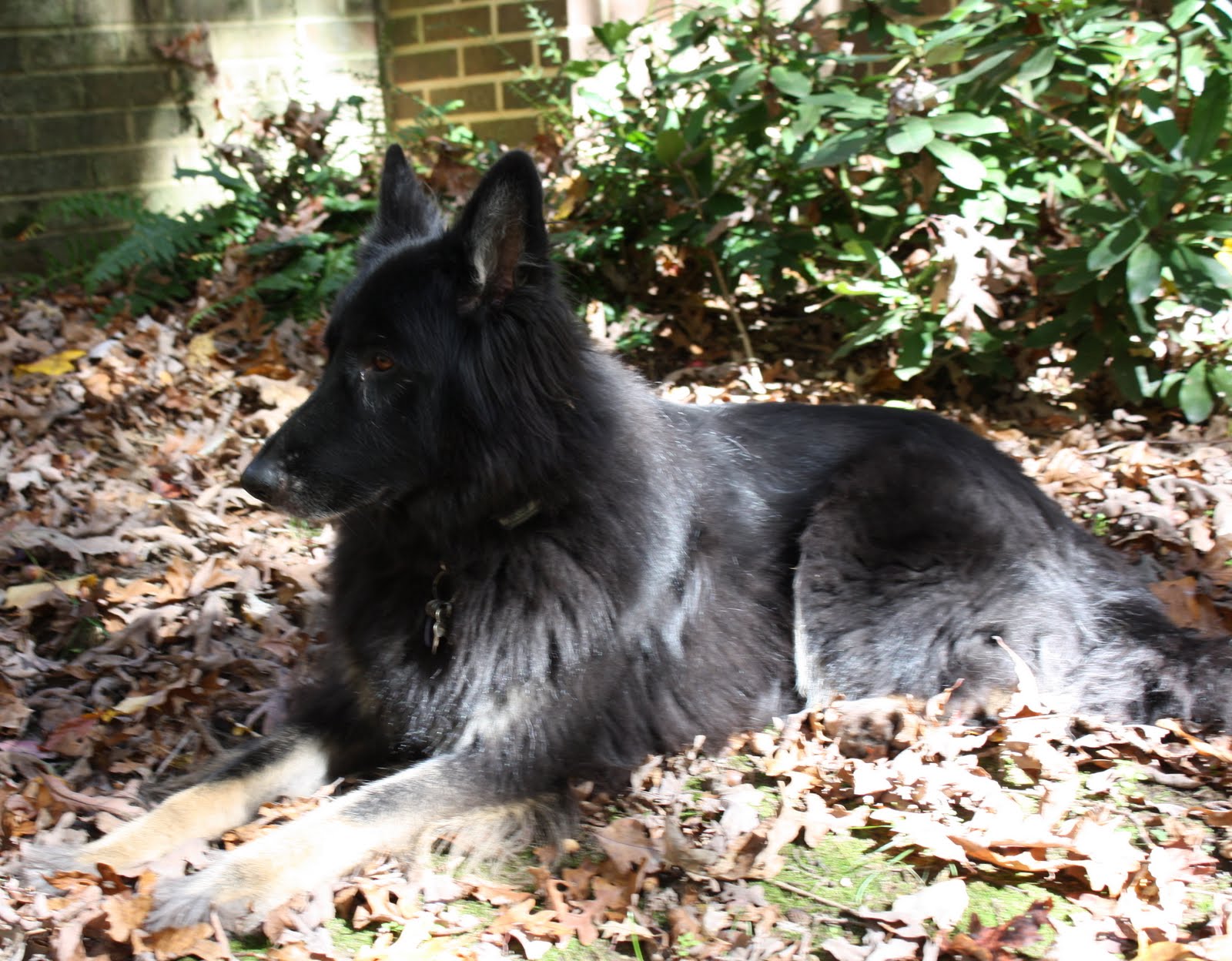
The tree that is throwing shade on Lili in the picture is, alas, in big trouble, leaning as it does perilously close to our house in a time of howling winds & earthquakes. The axeman cometh.

Leave a comment

Filed under aggression happens, gets right up my nose, zero-sum-gaming

The Uncanny Valley


This highly technical term, coined in the 70s by the Japanese roboticist, Masahiro Mori, could just as well be the title of a Hollywood horror flick, nar’mean? What Mori-san meant, though, was that sudden dip in a graph measuring the “appeal” of humanoid robots, that occurs when The Thing looks both Too Human, yet Not-quite Human, and the observer gets freaked out.

Dr. Christian “Jeepers” Jarrett’s article, “The Lure of Horror,” in the Halloween issue of The Psychologist, tries to account for the apparent predilection among current cinema-goers [it’s a British journal] for being freaked out. Despite what you might gather from the weekly Box Office grosses listed in The Hollywood Reporter, not everyone craves creepiness. In fact, it’s mostly males aged 6 to 25 who really dig “trips” to the Uncanny Valley. The rest of us get quite enough of that eery sensation, thank you very much, from our nightmares, hypnogogic illusions [in that twilight state between sleep & waking], and the weird coincidences of everyday life.

The concept predates modern film-making. Freud & his contemporaries were writing articles about Das Unheimliche [the Uncanny] in the early 1900s, pondering the scariness of dolls with missing eyes [remember the cartoons of Orphan Annie?], clowns, and anyone hiding their face behind a mask [or veil]. The limbic explanation, then and now, is that we vulnerable mortals need all the visual cues we can get, to determine whether a stranger poses a threat or not. If we think someone is PLU [People Like Us], and suddenly the mask slips, to reveal that they are [gasp!] non-PLU, our visceral response may be so dramatic that we get vertigo.

Back in the day, when I was a VA Trainee, I was interviewing a young “woman” veteran, to assess whether the first government-funded sex-change operation would increase or decrease his/her suicidal acting out. I had lived in Greenwich Village, the mecca of glamorous transvestites; but the individual before me looked and acted more like an Amish farm girl. When I asked about an incident from adolescence, the person’s voice, body language and facial expression morphed into the 16-year-old boy he had been; and I nearly fell out of my chair. It wasn’t scary; it was uncanny. We both had a good laugh about it, and carried on with the interview, in the safe surroundings of the Manhattan VA hospital. As a transsexual individual trying to live a “normal” life in 1970s NYC, however, the uncanny feelings my patient evoked in macho men often turned violent. [ See The Crying Game, not so much Tootsie.]

In this regard, Jarrett reports a startling finding from my least favorite research tool, the fMRI. 40 subjects watched creepy clips from scary movies and also boring clips from the same films. The researchers expected the amygdala to light up during the creepy bits; but, no, the intracranial wolf did not howl. What lit up were the “visual cortex, the insular cortex (a region involved in self-awareness) and the thalamus (the relay centre between the cortex and the sub-cortical regions).” I hate to admit it, but this is heavy. It suggests that members of that coveted demographic, males between 6 and 25, do not seek out horror films to get scared. They are there to get schooled. They are practicing [in what they are quite aware is a safe, pretend setting] vigilance. They’re getting good at discriminating the PLU from the non-PLU, innit?

Their motto is not, “Jeepers, creepers!” It’s “We won’t be fooled again.”

Leave a comment

Filed under attribution theory, limbic system, sharks and jets