Category Archives: limbic system

Too "Wired" to Sleep?


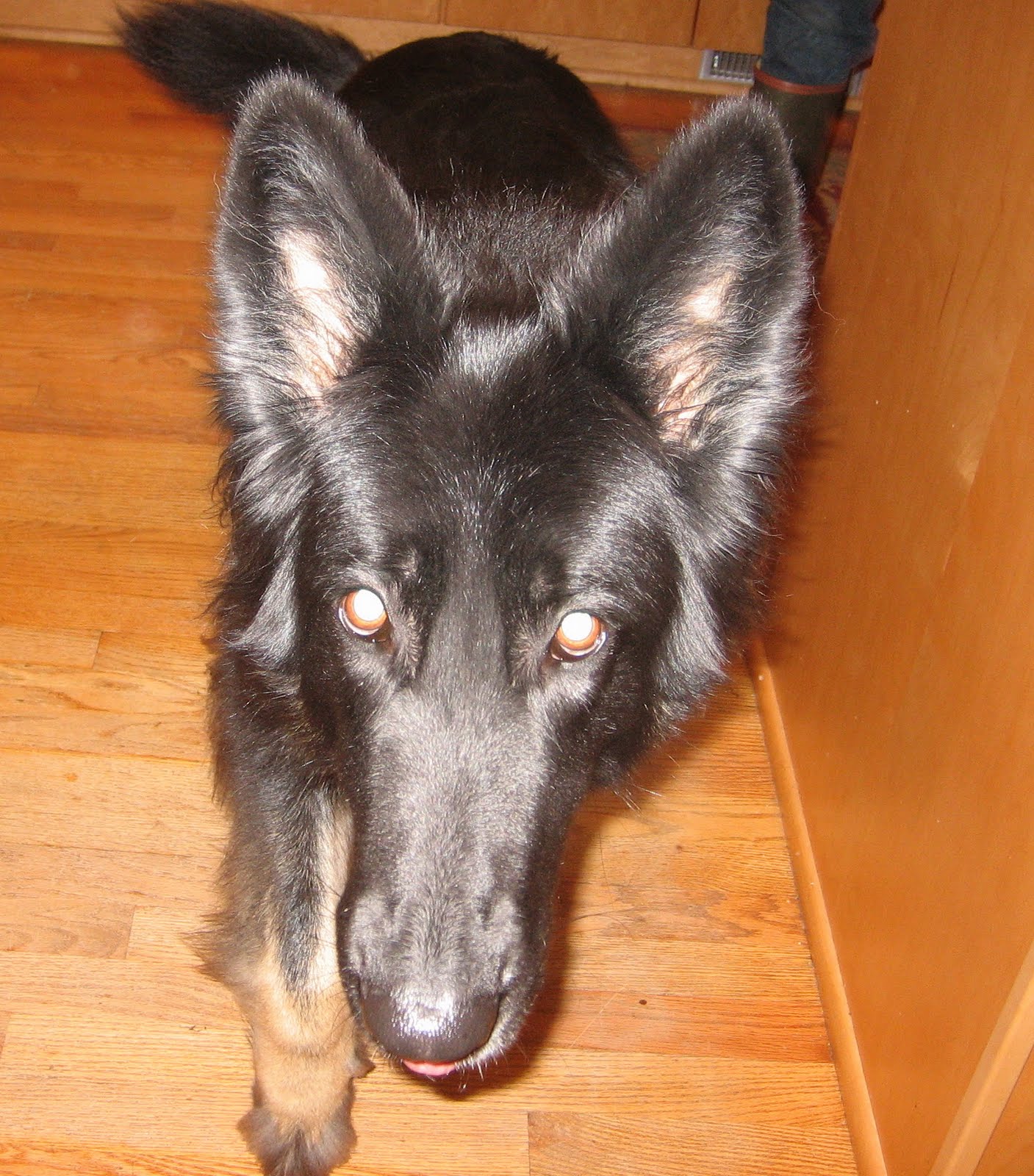
Whereas yesterday’s post dealt with getting back to sleep in the middle of the night, today’s topic is Getting to Sleep in the First Place. Brace yourselves. I am going to fly in the face of New Age holistic medicine here, and share the wisdom gleaned from years of Continuing Education seminars presented by molecular biologists. As they say in the UK, I’m going to “blind you with science.” [That’s not what happened to Lili. She’s posing as an insomniac.]

First, of course, we need an animal metaphor. Let’s go with twin ferrets. These well-meaning creatures inhabit our Autonomic Nervous System [a kind of auto-pilot, formerly believed to be unconscious and involuntary, which regulates stuff like heart rate, breathing, and speed of digestion]. One ferret, with the clunky name of Parasympathetic, just wants us to chillax, already, so he uses that ever-so-trendy neurotransmitter, serotonin, to slow down the beating of our heart. His [please don’t think of him as evil] twin, Sympathetic, is there to prevent us from flat-lining, and uses the much-maligned norepinephrine to jolt our heart back up to a life-sustaining rate [like a furry little pacemaker]. Though seeming to work at cross-purposes, they both want the same thing: homeostasis. Like Goldielocks, they want the rate of everything in the body to be Just Right.

So, now, have you ever noticed that on the nights when you are utterly shattered, whacked, whipped to the bone, and you figure it should be easy to fall asleep, what happens instead is a series of short dreams, in which you are falling, and from which you jerk awake, often with an audible gasp? Yeah, that’s the Twin Ferrets, just trying to keep you alive, man. “Paras” knows you need the rest, so he slows your heart rate way down [whence, the falling sensation]. Then “Sym” wigs out, for fear that your heart will stop altogether, and zaps you “back to life.” [The jerk.] [That’s what your body does. I’m not dissing “Sym,” here.] Eventually, these guys find a homeostatic heart rate and let you go to sleep; but the more fatigued you are, the more jactitation [jerking awake] you have to go through, to get there.

Back to Sleep Hygiene for a moment. Sleep is more easily initiated when the body’s core temperature is warm, but the room temperature is cool. One traditional way to warm your core is a hot bath; but who, other than little kids, has time for that at night? An even older strategy is a warming beverage. But which one? The traditional “nightcap” of high-proof alcohol doesn’t actually warm your body’s core [only the cockles of your heart], unless you go to the trouble of heating the liquid, itself, in which case, as long as you’re in the kitchen anyway, you might as well make the gold standard of soporific drinks, beloved by Europeans since the Explorers brought the main ingredient back from the New World: a cup of hot chocolate.

“No way!” I hear you object. “Chocolate has caffeine in it! That’ll just keep me up!” Obviously, you are only thinking about the agenda of “Paras.” “Sym” has a horse in this race, too, ya know. Here’s what the molecular biologists say. The milk and sugar contain tryptophan, which turns into serotonin [the sleepytime molecule] in the body, thus satisfying “Paras.” Also, the heat of the drink warms your core. But here’s the Beauty Part! The small amount of caffeine in the chocolate speeds up the heart just enough to mollify “Sym,” who can then hold off on delivering that jolting dose of norepinephrine.

Frequently Asked Questions: “How ’bout sugarfree cocoa mix?” That works, but add more milk, as your source of tryptophan. “How ’bout a glass of cold Nesquik?” Did you miss the part about warming the core? Now you’ll need to take a bath, just like a kid. “What if I can’t stand/am allergic to chocolate?” You can try a cuppa [hot tea with milk], but don’t try coffee, unless you make it weak and add lots of milk.

Final observation: Europeans consume far fewer pharmaceutical sleep-aids [per capita] than we do in the US; and they manage to get through their days & nights fairly well, non? There is a British watchdog of correct English usage who deplores the current fad of prefacing remarks with, “At the end of the day…” She declares, “The only correct use of that phrase is, ‘At the end of the day I drink a cup of hot chocolate.'” Nar’mean?
Leave a comment

Filed under altered states, limbic system

"Nana Window"


I just finished reading the cover story in this week’s NYTimes magazine, which I knew would get my amygdala aroused [and it did]. It’s about people whose amygdala gets aroused “too easily.” Oh, yeah? Says who? Jerome Kagan has been doing a longitudinal [Bad Fairy at the Christening] study at Harvard, starting with babies in 1989, whom he identified as either highly reactive [to novel stimuli], somewhere in the middle, or “low-reactive.” I’m going to let anyone interested look up the article; and instead I shall cut right to the chase. “Mary” was one of his “high-reactive” subjects, and he predicted that she would grow up to be a worrier. And, lo, she did. She’s worrying her way through Harvard as I write this. To which I respond, “Oh, come on! If that’s ”bad outcome,’ whaddaya call ‘good outcome,’ Jerry?”

Many pages into this up-till-then uncritical review of Kagan’s findings, the NYTimes author cites a researcher with a quibble: Dr. Robert Plomin of King’s College, London, wonders if, perhaps, subjecting these kids to the daunting fMRI, itself, might not account for much of their amygdalar arousal. Nar’mean?

Towards the end of the article, other dissenting voices are quoted, wondering why all of the “high-reactives” haven’t developed clinically significant anxiety [as predicted by Dr. Kagan]. Turns out some of the subjects are schmizing themselves into interpreting their racing pulses and dilated pupils as “being jazzed,” which they describe as “vaguely exhilarating or exciting.” Others [T.S. Eliot is mentioned] somehow manage to channel their amygdalar arousal into creating works of art [for the amusement & edification of the more laid-back among you, apparently]. Yet, the Bad Fairy gets the final word: “In the longitudinal studies of anxiety, all you can say with confidence is that the high-reactive infants will not grow up to be exuberant, outgoing, bubbly or bold.”

If that weren’t such an obvious load of old cobblers, I [the Exemplar of “High-Reactive” infants] would find it humiliating. Anyway, for those of you who would like a low-tech coping strategy to deal with anxiety, go to YouTube and look up “Nana Window.” On 23 April 2009 [St. George’s Day in England], the usual gang on the Chris Moyles [BBC Radio 1] show were joking around with Carrie, who had said, “My Nan always puts one in her window on St. George’s day.” [Her grandmother displays the Cross of St. George flag, which is England’s (red-cross-on-a-white-field) part of the United Kingdom’s “Union Jack.”] Chris & Comedy Dave chose to find a double-entendre in her innocent remark, and immediately improvised a Reggae song with the following lyric: “Nana Nana window. Nana window.” If you can’t find it on YouTube and still want to sing it, it’s all on one note, except for the “dow,” which is a 5th higher. Commence singing at the first sign of anxiety and repeat until you feel better.

In scientific point of fact, singing almost any song will reduce most anxiety symptoms, for the following reasons. Singing regulates breathing [thereby countering hyperventilation]. The sillier the lyric, the more likely you are to laugh [thereby relieving muscle tension]. The louder you sing, the more adrenaline you expend [thereby restoring homeostasis to your body]. Cognitively, you are likely to distract yourself from the alarming stimulus for long enough to get some perspective on it. [Is the irritant really awful or just…you know the mantra by now.]

The lyric “Nana Window” is the latest in the long and worthy tradition of non-lexical vocables [such as “Hey nonny nonny” from Shakespeare’s Much Ado About Nothing, and more recently, “Ob-la-di-ob-la-da” from the Beatles’ White Album], which multitask, by fulfilling [at least] two Speech Functions. They are Phatic [imparting no factual information, just keeping the listener listening] and/or Poetic [since they may, indeed, be a secret code for something else[such as “Carrie’s Nan is displaying something in her window.”]; and they often are also Emotive [expressing a particular feeling]. [“Hey nonny nonny,” according to Shakespeare scholars, expresses dismay.]

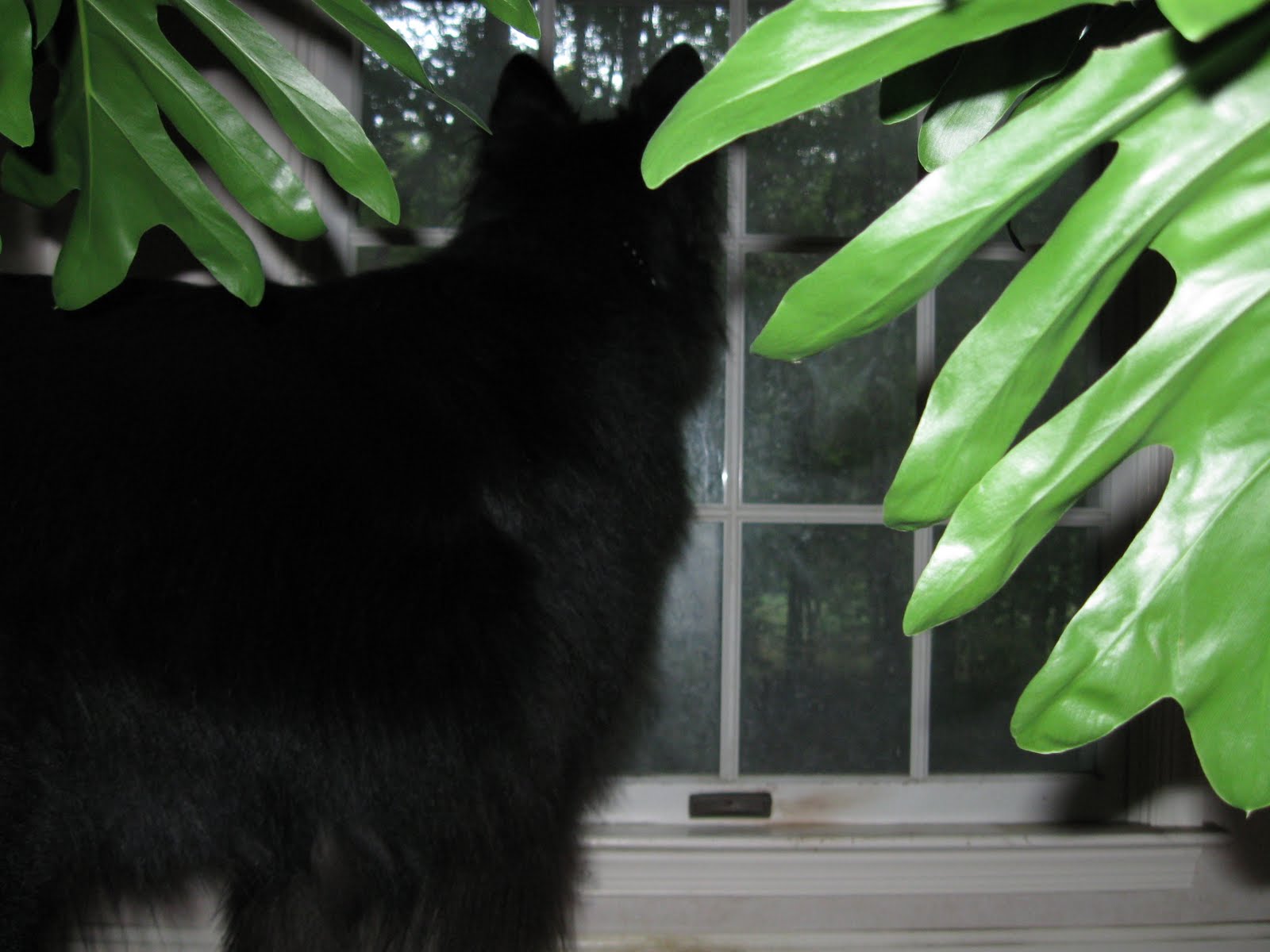
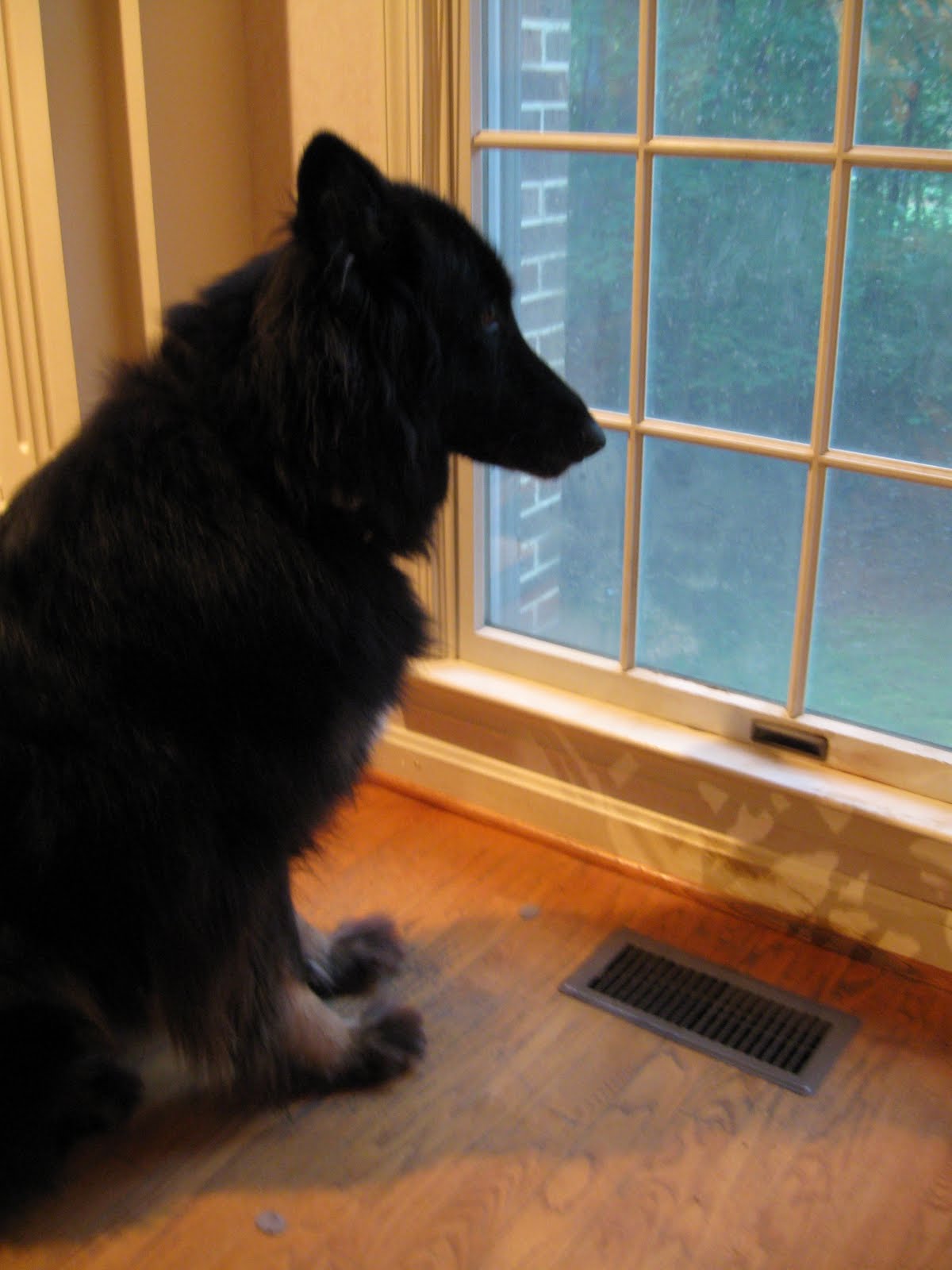
Here is Lili, displaying herself in the window, while keeping [hypervigilant?] watch for intrusions. The other day, I was upstairs brushing my teeth, when I heard [evidence of] her aroused amygdala: barking. I planned to go down and assert my Pack Leader status over her, by telling her to “Yaka mashie. Asoko.” [“Be quiet. Go down to your room in the basement until you can compose yourself.”] But before I could even rinse my mouth out, there was silence. I discovered that Lili had piped down and taken herself downstairs, all on her own. Now, that’s what I’m talkin’ about! So, okay, our amygdala gets aroused easily; but we humans, too, can learn to tell it to “Yaka mashie. Asoko,” [perhaps by singing the “Nana Window” song], and thus stand ourselves down from our many alarums.

Leave a comment

Filed under comic relief, limbic system, murky research, stress and cortisol

What are you laughing at?


Tell you what Arthur Koestler thought. In 1964 he wrote a tome on the subject, The Act of Creation, the burden of whose 751 pages, is that all humor, scientific discoveries, and works of art occur when two worlds collide. He put it rather more ponderously, “when two matrices bisociate.” By this he meant, when two frames of reference [each with its own rules of logic] are unexpectedly juxtaposed. Abstract and boring enough for ya, so far?

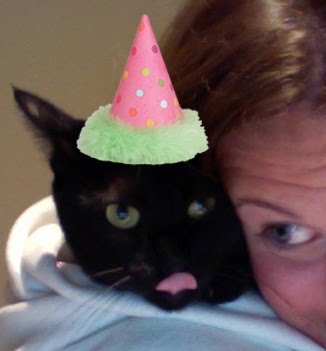
Consider this visual joke: Penny the Cucamonga cat is “wearing” a [photo-shopped] party hat, looking anything-but-in-a-party-mood, being held by my daughter [most of whose festive facial expression I have discreetly cropped away, to preserve her privacy]. Koestler would say that there are at least two matrices bisociating here. Penny, a cat, is impersonating a human “party animal,” which is also a pun; and the obvious photo-shopping of the party hat is my daughter’s mockery of the shoddy paparazzi “photo-journalism” ubiquitous in LA, where this picture was taken. Not unlike those ancient philosophers, Koestler believed that in all humor there is an element of defensive-aggression, against the butt of the joke. In this case, the joke is metaphorically on Penny [since we know how much pets detest wearing silly human costumes for gag photos]; but it’s actually on the paparazzi. Geddit?

Let’s go back to my fave joke, introduced in the “Funny Bone” post. “Horse walks into a bar. Bartender says, ‘Why the long face?'” One matrix is the well-worn, formulaic [mostly New York-based] genre of “guy-walks-into-a-bar-bartender-says-why-the-long-face?” joke. This collides with a more obscure joke tradition [mostly in Ireland & the UK], of placing horses in unusual settings. Back in the day, there was a series of print ads for whiskey, using the slogan, “You can take a White Horse anywhere.” Near the beginning of the cult Irish flick, Into the West, a [white] horse is taken by lift up to the top floor of a council housing flat in Dublin, and the human passengers on the lift don’t bat an eye. [A nod to the whiskey slogan.] That gets the horse into the bar, in my fave joke. The second matrix is a pun: a play on the words, “long face.”

But where’s the element of defensive-aggression in this oh-so-sophisticated joke? The butt of the joke is the genre of joke, itself. It is what Jon Stewart would call a meta-joke. It is a joke about a type of joke. Probably, it resonates most with those of us who have tried to “be funny,” for a living [or for a grade in acting school].

Those of you who remember Jakobsen’s six Speech Functions will be raising your hands and “chirping” [@ 50 KHz], “Oooh! Oooh! This is Poetic Speech we’re talking about! Designed to Tell the Ugly Truth without Suffering the Ugly Consequences.” That is exactly what we are talking about. The teller of the joke [little David] gets to poke fun at big, bad Goliath; and the laughers at the joke get to expend their adrenaline in a non-combative manner. If they laugh until they cry, they even get to purge themselves of some cortisol. Goliath is mocked, but everybody survives. That’s what Koestler thought; and his most enduring book is Darkness at Noon, a repudiation of the “Goliath” of Communism, with whom he had previously cast his lot in the 1930s.

Now, back to Jaak’s laughing rats and tickling. [I’ll leave the cocaine commentary to the Wallabies among you.] Koestler believed that what rats [and little children] find laughable about tickling is that it is a mock attack. It’s funny because they know they are not really in danger of pain & suffering. The tickler is only impersonating an attacker. If actual pain results, or even the fear of pain, it’s no laughing matter. In fact, Jaak found, if even one cat hair [a signifier of threat from a predator] is in the room where a rat is being tickled, the rat will not “chirp” [@ 50 KHz]; it will bum [@ 22 KHz].

The rough-and-tumble play of all baby mammals produces “chirps” of glee. In developmental psychology, this epitomizes the concept, “This is only pretend.” Sigmund’s daughter, Anna Freud [she of the German Shepherd “Wolf”], called this Regression in the Service of the Ego one of the most important defenses older humans can use, as a respite from the real [not mock] threats in their lives. When we laugh at Jon Stewart poking fun at Kim Jong Il, we are pretending that the threat that little martinet poses to the world is “only pretend.” For that little moment, we are regressing to a childlike belief that Kim is just a joke [and giving our overtaxed limbic system a rest].

So, go ahead and laugh it up, folks. Feels great, doesn’t it?

Leave a comment

Filed under comic relief, limbic system, pragmatics, semiotics

One-Trial Learning


The American philosopher-turned-behavioral-psychologist, Elwin R. Guthrie (1886-1959), challenged other Behaviorists of his time, by declaring: “A combination of stimuli which has accompanied a movement will on its recurrence tend to be followed by that movement.” BFD? You’re missing the “heaviosity” of his premise. Unlike Pavlov [Big Daddy of Classical Conditioning] or Skinner [BD of Operant Conditioning], Guthrie was the BD of Associative Learning. No reward need be given, said he, for a movement to become “cued” by a stimulus. Forget the all the use of High-Value-Treats to reward the desired response, advocated by dog trainers, or the symbolic reward, the clicker [which betokens to the dog that a treat has been earned, redeemable at a later time]. According to Guthrie, it only takes one coincidence of stimulus and movement, for the two things to become forever paired. Boom! Done! [Pavlov’s dogs had to have many pairings of sub-lingual meat powder with a bell, before the bell alone elicited drooling.]

To the extent that Guthrie’s theory is true, it is not altogether good news. In college I was riding shotgun in my roommate’s car, when a motorist failed to observe the Stop sign at an intersection, and plowed into the side of the car. Having caught a glimpse of his not-slowing-down car in my peripheral vision [the cue], I crouched into the fetal position recommended for airplane crashes [the movement]. Nevermind that my addled hippocampus had applied the wrong transport safety tip [and I consequently suffered gory-looking but superficial facial abrasions that I would have avoided, had I remained sitting upright]. To this day, 4 decades later, when a I see a car approaching an intersection “too fast to stop,” I have to fight the reflex to cringe. It doesn’t happen when I am driving, mind you, just when I am riding shotgun; but this One-Trial Habit [as Guthrie called it] annoys the hell out of whoever is driving “Miss Crazy.”

Let’s do the wolf-work. It is humiliating to them, that I appear not to trust their driving skills. Further, my sudden movement is both intrusive (sometimes blocking their view of the other car) and frightening (since it betokens a “clear & present danger,” rather than a remembered danger from long ago).

Guthrie’s own recommendation, to diminish the power of a problematic cue/movement connection, was called Sidetracking. One must endeavor to discover the initial cue, and then deliberately associate a different [incompatible] movement with it. Alrighty, then. What’s incompatible with cringing? Why, sitting upright (as I should have done in the first instance), with my forearms resting on my thighs (rather than covering my face). Unfortunately, whenever I abruptly assume this crash-test-dummy position, it is almost as alarming [therefore, annoying] as the cringe. At least it doesn’t obstruct the driver’s view. In recent years, I’ve taken to wearing sunglasses while being driven [avoiding harmful UV rays, you know], behind whose dark lenses I close my eyes when a car rushes up to the Stop sign. I also contrive to sit in the back seat whenever possible, where I am blissfully oblivious to the threat of reckless drivers. I am unflappable in taxis, even in Manhattan.

Not all instances of One-Trial habit formation are as trivial as my intersection cringe, however. The cue/movement nexus might account for the intractability of various substance addictions. Today’s New York Times has an article speculating that Adam Goldstein [aka DJ AM], may have relapsed into drug abuse because of filming a documentary in which a young woman injected herself with heroin. An individual’s first use of an addictive substance is likely to occur in the presence of others who are using the substance. According to Guthrie’s model, the cue [of others shooting/lighting/drinking up] will be forever associated with the movements one made, in connection with the first use of that substance.

Nor need the cue be visual. Even in 1960s Britain, the sound of an air-raid siren sent survivors of the Blitz diving for cover under a table or bed. The whiff of that certain food you ate just before you got sick can, years later, activate your gag reflex. The song you were listening to when that false love in high school broke up with you can still make you cry, a lifetime later.

Yesterday, while making his weekend rounds at two DC hospitals, my husband discovered that his car had [at least temporarily] “died,” and he came home in a rental car. Lili, who was awaiting the return of her beloved master, saw the intrusion of a strange white vehicle in the driveway [the cue], which set up a barrage of histrionic barkitude [the movement]. Even when her master emerged from the rental car, she could not stop herself from barking at it. Just now, his arrival in the cue vehicle again sent her into a reflexive barkfest, despite my commands to her to assume a position [presumably] incompatible with barking [“Foo-say!” Lie down!]. When the UPS truck cues Lili to bark, she has learned the incompatible movement of sending herself down to the basement [where she can’t see the offending vehicle]; but apparently this weekend’s “combination of stimuli” [strange car, beloved master] presents a more difficult cue to Sidetrack.

It was Guthrie’s contention that “excitement facilitates associative learning,” making the cue/movement connection even stronger. Lili is very excited whenever her master comes home.

To be continued.

Leave a comment

Filed under gets right up my nose, limbic system, post-traumatic stress

Virtual Backgammon


Yes, I admit it. I am a Luddite, but not a Troglodyte. Until last Sunday I regarded computer games [especially the one which spends electricity, merely to spare the player the Therbligs it would take to shuffle and lay out an actual deck of cards] as a waste of time and resources. Not any more.

I direct your attention to a BBC on-line [see, I do use my MacBook for more than word processing] article, posted on 18 Oct 09: Virtual Reality Tackles “Shell Shock.” In it, the Beeb’s medical correspondent, Fergus Walsh, describes the successful treatment of 30 [out of a group of 40] US military personnel diagnosed with Post-traumatic Stress Disorder, following several tours of duty in Iraq. Alas, the 30 who responded well to the treatment were thereafter sent back to Iraq, or on to Afghanistan. But I digress…

The [non-radioactive, non-pharmaceutical] treatment was developed by Albert Rizzo, of the Institute for Creative Technologies at the University of Southern California, and is based on the X-Box game, Full Spectrum Warrior. We’ll get to the [literally] whiz-bang features of the current treatment soon, but first, back to Vienna.

If you recall my original “Backgammon” post, Freud used that game metaphor to describe the capture and imprisonment of one’s “soldiers” at the scene(s) of particularly harrowing “battles” in the course of one’s life. Lose too many troops [which he conceptualized as psychic energy], and you become unable to “soldier on.” His therapeutic model encouraged the traumatized individual to revisit the distressing events, recalling them in as much detail as s/he could manage, with the goal of “liberating the hostage soldiers” [regaining psychic energy]. In the actual game of backgammon, one has to throw a specific dice score, to move a “soldier” off the bar, and allow him to complete his journey home to safety [“bearing off”]. Why did this psychotherapeutic treatment take so long [or not work at all]? Resistance. Having survived [sometimes, just barely] a traumatic event, who would want to “go there” again? The Jack Nicholson censor in the mind tells the would-be recollector of a trauma, “You can’t handle the truth! I’m not going to let you remember what really happened back there.”

Let’s use the wolf [up-your-nose] model to explain the same thing. By definition, the traumatic event was frightening. If a major injury was sustained, there was pain & suffering. Often, the trauma involved the sudden intrusion of hostile individuals or their devices of destruction. Less obviously, but saliently, there may have been humiliating circumstances [such as a momentary loss of nerve, or loss of continence]. When the amygdala is thus aroused, the hippocampus is deprived of blood. Therefore, the brain’s most direct information-processing site is “off-line” during the traumatic event. Victims of violent crime are notoriously bad at picking their assailant out of a line-up. Back in college, I was a very weak witness during my deposition for my roommate’s totalled car lawsuit: unable to remember the make of the car that hit us, or even the make of the car we were in! [Luckily, the guy settled out of court, just as our case was called.]

Guthrie’s One-Trial Learning model is also relevant here. The complex stimuli of a traumatic event [the cue] may be followed by an evasive movement [as is my case], or by an aggressive movement, or by a catatonic freeze. When I was a VA Psychology Trainee in 1973, working with veterans “fresh out of the jungle” [of Vietnam], the most commonly cued movement in our clientele was aggression. Assaulting a stranger who accidentally brushed up against you from behind would get you arrested in a New York minute, back in the day. The best explanation the assailant could offer the judge was the non-specific, “All-of-a-sudden, I was back in Nam.” [Just like, all-of-a-sudden, in that shotgun seat, I am back in Durham.]

In 1999, Rothbaum et al. modified an X-Box wargame to treat a 50-year-old Vietnam vet, who had been suffering flashbacks and other PTSD symptoms since that war. Their hope was that Virtual Reality Exposure Therapy would overcome the patient’s resistance [or limbically-induced amnesia], allowing him to re-experience, in a safe and controlled setting, the traumatic events that had held him hostage for 3 decades. Once the memories were recovered, the conventional therapeutic work of processing the information and assisting the patient to “handle the truth” could begin.

As the lead clinician in the current San Diego study says, “Our different senses are very powerful cues to our memory.” Therefore, as well as tailoring the sights and sounds to re-enact the individual soldier’s traumatic event(s), the Virtual Reality program adds realistic motion [such as vibrations and sudden impacts] and smells: burning rubber, cordite, garbage, smoke, diesel fuel, Iraqui spices and what is euphemized as “body odor” [but was more likely ordure]. The subject’s heart rate and galvanic skin response [both measures of anxiety] are constantly monitored during the 30-minute VR sessions, to “keep it real,” but not so real that the original [fight/flight/freeze] movement is triggered. Then an hour of debriefing and talk-therapy ensues. The entire treatment consists of only 4 once-weekly sessions.

Just think of all the Therbligs such a treatment method could save the government! More importantly, just think of all the “hostage soldiers” it could “liberate” from their traumatic war experiences.

Leave a comment

Filed under catharsis, gets right up my nose, limbic system, post-traumatic stress

Lumbered


In 1961 our family [and just about everyone else in the UK] went to see Anthony Newley’s WestEnd musical, Stop the World, I Want to Get Off, which was thrillingly cynical [especially to us Young Ones], about what is euphemized in the US as “a shotgun wedding.” Newley wrote & sang the phrase, “I’ve been lumbered.” It sounded like another example of Cockney slang [the meaning evident from the context]; but it’s actually ever so old, dating from the 1500s in England, and the 1300s in Continental Europe. It refers to an Italian ethnic group, the Lombardi, who were pawn-brokers and money-lenders. Lombard Street in London was so named for its plethora of pawnshops. [Incidentally, did you know, “Pop goes the weasel” is a euphemism for pawning a fur garment?] The Oxford Concise Dictionary (1911 ed.) defines “to be lumbered” as “to be burdened with something unpleasant” [which pawn-brokers were: namely, the “popped” weasels, used furniture, and other old tat that their clients had exchanged, for enough money to buy more rice & treacle]. Nar’mean?

Last week’s exploration of Guthrie’s One-Trial Learning theory was prompted by an event in the forest, during Lili’s & my morning walk. It had been raining for days, and then it got windy. The beaten path was like a waterslide in the downhill parts, to avoid which, I was detouring right through the trees, for better footing. As I came to the next downhill bit, I heard a tremendous crack, like the detonation of a shotgun, directly in front of me. First, I froze. Then I looked behind me, to see if a deer had been shot [since I, happily, had not]. Then I looked directly ahead, to see if I could spot a hunter and tell him to cease fire. Lili, meanwhile, looked straight up. Following her gaze, I saw a huge branch break off a tree, and fall right on the spot where I had planned to walk. Amazingly, I did not utter my trademark Hitchcock-victim scream, but just calmly followed Lili [my Pack Leader pro tem] along the slippery path, away from the newly fallen lumber.

We used to think Lili was silly, to look up warily at every looming object she passed [such as playing field lampposts, the water tower, and even our ceiling fan, when it first turns on or off]. Now I get her point. I was looking everywhere but up, in the woods; and without Lili’s vigilance I would have been well and truly lumbered.

Then I wondered if the next day I would shy away from that specific part of the woods, or if I would be more amygdally aroused in general, especially by any “gunshot” noises. In fact, I was able to cognitively reframe the falling branch as “a lucky escape,” rather than a “trauma”; and we have had remarkably serene walks. Today was the first time my husband has been able to come with us in two weeks, and it had been bucketing rain last night, so I remarked, “I hope all the branches have done their falling, by the time we pass through.” Several 100 yards past the site of last week’s fallen branch, he pointed to an 8-inch-in-diameter, newly fallen tree, lying directly across our path, and said, “Well, there you go.” [It’s not the one pictured here. No camera today.] Lili glanced up warily at an adjacent, precariously-balanced tree, decided it posed no immediate hazard, and jumped over the fallen lumber.

So, even without a tailor-made X-Box game [Timber!], I have been able to do my own limbic debriefing, and avoid being lumbered with a fear habit about our beloved walks on the wild side. In the thick of the forest, I will trust Lili’s big ears and big eyes, to warn me of impending danger from above. Still, I will be the judge of whether the people and animals we encounter on the ground are friends or foes.

Meanwhile, since last week, I have not flinched once while riding shotgun with my husband. See, we can learn to tame our Wild Things [aka howling limbic wolves], of which, more next time.

Leave a comment

Filed under limbic system, post-traumatic stress, semiotics

Timber Wolf


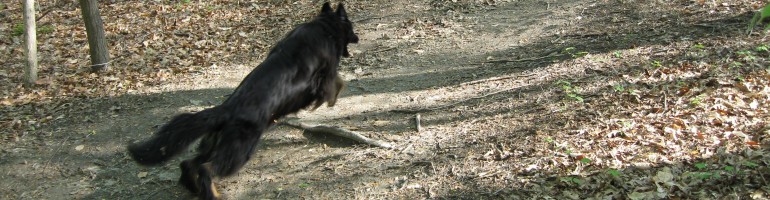
Before we consider the genius of Maurice Sendak [in the next post], let’s hear it for the amygdala [which I am usually offering readers tips on subduing, or at least bending to their will]. If you look up “timber wolf,” you will see a photo of a black wolf, who looks quite like Lili [except Lili’s ears are bigger and shaggier, like an over-the-top stage version of the wolf in a melodrama]. Since she is my totem to represent the amygdala [and I am feeling particularly grateful to her, for alerting me to falling branches in the woods, this rainy season], I shall henceforth regard her as my “Timber! wolf”: a niche-market service dog who warns its owner of a very specific [hopefully, rare] hazard, thereby inspiring confidence during woodland walks.

Speaking of (actual) service dogs, this week’s New Yorker has an article entitled “Man’s Best Friend: Scratch and Sniff,” describing the ability of several dogs in the K-9 Unit of the New Jersey Department of Corrections, to detect the presence of contraband cell phones in prisons, by “scent.” It’s a heartwarming article [unless you are incarcerated in New Jersey, Virginia, or Maryland], but here is my favorite bit. I shall quote, as the article does, K-9 Officer Mitchell: “All our dogs right now are German shepherds or Labs. We did try one golden retriever, but we had to fail him out. That dog was too easy going. He’d come into a room on a search and just lay down. We sent him back to the Seeing Eye dog center in Morristown, where all our cell-phone dogs came from. That golden was a lover, not a fighter.”

So, what breed of dog are you? What is the default setting, in your amygdala? Do you tend to “bark” at the first whiff of threat? Do you, instead, high-tail it outta there? Or do you go into the deer-in-the-headlights freeze? And, anyway, which limbic response do we think that golden was displaying, lolling around on the cellblock floor? Is that the laid-back form of freezing? [Gives “Chill out” a whole new meaning.] To use an Australian animal metaphor, in the choice of a K-9 partner to sniff out the dodgy stuff, it’s a matter of “horses for courses.” [By which a racecourse punter in Oz means to say, if the bobtail nag is a good mudder, and the track is listed as “sloppy” that day, bet your money on her; but if the track is listed as “fast,” bet on the bay. No worries, mate.] So, if a dog is limbically wired to bark at a perceived threat, it is a better bet for contraband detection, than one wired to run away or freeze [or loll, even].

In fact, all dogs [and horses, and people] are capable of all 3 limbic responses. It’s just that one response is more typical or characteristic of any given individual. Here is where I invoke our acting school aphorism: “Know your type, and love your type.” I love Lili for her vigilance [even if she issues many false alarms in the course of a day]; and I know that my limbic wiring is closer to hers, than to the 2 hippy-dippy golden retrievers next door. My goal is not to “change breeds,” but to become the best German shepherd [or even Timber wolf] I can, by lowering my incidence of false alarms.

Leave a comment

Filed under limbic system, sharks and jets

About a Bird


Readers of this blog might have the impression that my mother was only a featured player in our family variety show. That flamboyant Rosie was the star. Indeed, when he was present, he was usually the Top Banana; but he would be the first to declare that my mother was the Class Act.

In telling her story, I shall try to resist the cognitive distortions of Black & White [all or nothing] and catastrophic [“This is awful!”] thinking. But it will be hard. Myrna [Deal with it. She had to.] was a precocious pianist, who began concertizing in Ohio and Washington, DC, in her early teens. She won a national piano contest, the prize for which was a scholarship to The Juilliard School of Music [whence she graduated with a Bachelor of Science (!) degree in 1943]. You are given a main mentor there, and hers was James Friskin [a Bach maven]; but Alexander Siloti [Rachmaninoff’s cousin] also taught there during her Juilliard years.

Now, Mumsley [a silly name my sister & I gave her, about the time our English cat got saddled with Ying Tong] was an elfin little creature: 5’2″ with very small hands. This is crucial to the absolutely true story I am about to relate [which I have fact-checked with my sister and the Internet]. One day in 1954, when we were living in Tarrytown, NY, our parents piled us into the wallowing Buick for a mystery tour, to a sprawling country house in a not-nearby-enough-for-me town [possibly Mt. Pleasant, near Valhalla, where Rachmaninoff is buried]. Myrna had been invited by “some Cousins of Rachmaninoff” [we figure, Siloti’s family], to “show them how she did it.” See, Rachmaninoff has been retrospectively diagnosed with Marfans. He was 6’6″ with huge paws, and wrote music for big-handed folks like himself. Now, whether they had heard her nifty 15-minute wartime radio show, or read a review of a concert she gave featuring the Russian giant, they wanted to watch her in action.

At 5 years old, and already dreading the drive home, I was morose…until the Cousins let fly the parakeets. Talk about chaos! As Myrna was playing, a bird alighted on the temple of her glasses, and stared her in the eye. Trouper that she was, she just kept on playing. “Open your mouth,” invited a Cousin. “He’ll check your teeth.” Myrna smiled, but kept her jaw clenched. When the command performance was over, a Cousin asked if we had a cat. Rosie piped up, “Yes, but we’ll take another, if you’re offering.” “Actually, we were going to offer you ‘Pretty Bird’ [the avian dentist]; but you have a cat.” “We’ll make it work!” assured Rosie; and home we drove, with a blue parakeet, who withstood the aerobatic maneuvers of Chip-Chip the tabby tom [whom you have yet to meet], and later of Alfred the dog, for 6 years, without mishap.

When Myrna was 35 [and I was 10], she got Multiple Sclerosis. The English still call the most rapidly-progressing type [which the cellist Jacqueline du Pre had] “galloping.” Mumsley had “cantering” MS. She continued to play publicly for another 10 years, although she required a wheelchair by then. She died 3 months before my first child was born, at 61 [my age now].

Because she was a Goody-Two-Shoes, teetotalling, sweet-natured person, it is tempting to reduce her life to an ironic cliche: “Virtue is its own punishment.” My sister’s & my fears for her led us to many impatient [angry] outcries of “Oh, Mums-ley!” As if we could shout her back to health. But she never lost patience with us, and not often with herself. She remained the mistress of the deadpan one-liner. The last time I saw her, my in-laws were visiting and she was listening, as always, to the classical music radio station. “Oh, I just love La Traviata!” enthused my mother-in-law. “How ’bout Il Trovatore?” rejoined Mumsley.

A Class Act.

Leave a comment

Filed under catharsis, comic relief, Epictetus said..., limbic system

Gratitude


No doubt, most gatherings of family, friends & invited strangers seated around the table on this Thanksgiving were given an opportunity to express their gratitude, either individually or collectively, either sincerely or flippantly [depending on the group demographics]. Whatever was identified as a cause for giving thanks, the very act of doing so [according to Martin Seligman and other mavens of Positive Psychology] did the “thanks-giver” good.

In fact, the more unfortunate and hard-done by an individual is feeling [like Lili on the Penalty Box Rug], the more beneficial it is, to “Accentuate the Positive” [as the lyrics of a Depression-era song advised]. Irony is almost unavoidable, and totally okay, in this exercise. Such as, in the genre of joke that ends “…unless you consider the alternative.” [Usually, being dead.] I wonder if there is, even now, a jolly japester fashioning zombie & vampire jokes in this vein…

As part of my dawn get-ready-to-face-the-day routine, while zoning out for 50 minutes of aerobic exercise [in the convenience & privacy of my basement, for which, I give thanks], my iPod playlist includes at least one tongue-in-cheek [but also sincere] “gratitude” song. For years, it has been a song off of The Holloways’ album, So This Is Great Britain? [“Generator”], the refrain of which is, “May I remind you that you don’t live in poverty? You got your youth, and you got food in your belly.” [Well, c’mon, folks, 2 out of 3 ain’t bad, nar’mean?] These days, it tends to be a song off of Paolo Nutini’s 2nd album, Sunnyside Up [“Pencil Full of Lead”], which is a Dixeland-meets-Gilbert & Sullivan-patter-song enumerating the things for which the diminutive Glaswegian son-of-a-fishmonger is grateful, featuring the chorus, “I’ve got food in my belly and a license for my telly.” I feel the BBC should be grateful that young Poalo makes the payment of Britain’s mandatory TV & radio license fee [of 139 pounds, 50 pence, Sterling] sound so fabuloso, with every refrain.

Beyond any metaphysical benefit daily gratitude bestows upon the thanks-giver, at the corporeal level, it blocks the production of cortisol and encourages the production of endorphins. I find it a helpful antidote to the 4 horsemen of what-gets-up-my-nose, on any given day. “It’s 5.15 in the bleedin’ morning, and you’re alive & able-bodied enough to be down here working up a sweat.” [There! Intrusion and pain & suffering neutralized, with one co-ordinate clause.] “While I’m busy here in “the bike room,” Lili is having a barkfest at Arnold, her neighboring German shepherd, thereby adding some joyful chaos to the morning.” [Boom! Intrusion and humiliation re-framed and diminished.]

I could go on, but you get the idea.

Leave a comment

Filed under Epictetus said..., limbic system, stress and cortisol

First, Face It, Head-on


By “it,” I mean your loss: of traction, of your wallet, of a Loved One, of your reason for living, whatever. Remember Driver’s Ed, especially those of you from a cold climate? The most counter-intuitive thing to learn [and to convince yourself to do, in the actual situation], is to “steer into a skid.” [Also, pre-ABS, don’t stomp on the brake pedal, just “feather” it.] Yeah, yeah. You’re less likely to “fishtail,” or even “spin right round”; but, by definition, you’re heading in the wrong direction! “Just for a moment, until you regain a bit of forward motion again,” the instructor soothes. Turns out, the same paradigm applies when you’re flying a single-engine airplane and it stalls. Intuition shrieks, “Pull up!” but your instructor says, “Point the nose down, to pick up air speed [and let Bernoulli’s principle lift you up].”

Likewise, the first [and hardest] thing to do when something bad happens to you, is to face it, already. Boy, doesn’t limbic arousal mess wi’dat? Like making the whole thing play out in slow-motion, so that you can kid yourself, “This is just a dream sequence. I’ll wake up in a minute.” I did that when my purse was stolen in London in the ’70s [even though I had lost 3 wallets to pickpockets during my years in Manhattan]. As usual, that time distortion thing has some survival value, allowing you to postpone overwhelming panic [loss of blood flow to the hippocampus] long enough to complete your Flame Out Chart protocol. What’s that? Actual pilots of actual jet planes have a laminated list of steps to take, in case of an engine flame-out [since most jets make lousy gliders & Bernoulli’s principle cannot help them overcome gravity]. It’s written down, because some panic is likely to trickle through to the pilot’s amygdala in that situation [Right Stuff notwithstanding], causing Highly Inconvenient memory loss for “What’s the first thing to do? And the second?” The Naval aviator euphemism for that is “Having a bad day.”

So, assuming you’re not in charge of a disabled aircraft–but still, not everything’s going your way–if you can get yourself to face the bad news real time [not just after the fact], your trusty hippocampus will be able to help you through it: by remembering previously learned recovery protocols, or devising a new one on the spot.

When I faced the fact that my footing was gone for good on the black ice, and I had entered the slo-mo phase of my debacle, I remembered my acting school class [which Chevy Chase must have aced] in safe-but-convincing-stage-falls: “twist to the side, knee, hip, extend arm to protect head, boom.” That’s just how it went down, on the day.

As they say about airplane flights, “Any one you can walk away from, was a good one.”

More of this next time. Meanwhile, this is West Coast Penny, visiting the East Coast for the holidays. Can you tell whether she’s looking away, or facing you, head-on?

Leave a comment

Filed under Epictetus said..., limbic system