Through a Glass, Darkly


This Biblical allusion dates from a time when glass was so cloudy that it obscured, rather than clarified, an image seen through it. It is a good metaphor for the value of the Metalingual speech function [as in, “What you talkin’ ’bout, Willis?”]. In the “Dog Eat Dog” post, I presumed to “know” what the guy in the elevator really was talking about [which I called his “subtext,” like the English translation at the bottom of an Ingmar Bergmann film]. It was just my guess, based on his “semiotics” [words, voice inflection, facial expressions and body language]. Figuring out what the other guy is actually trying to say is not rocket science–in fact some rocket scientists can’t do it very well at all. The Austrian whose name is now associated with the “syndrome” of the interpersonally challenged [Asperger], called it “Severe Engineer’s Brain.”

Dogs [also cats, children, and “clairvoyants”] are naturals at discerning the other guy’s subtext. The less fluent you are in the speaker’s language, the more you pick up on other clues about the message. As a born quidnunc [literally, Latin for “What now?”]–known in other cultures as a Busybody, Nosey Parker, or yente–I have always loved to listen in on fellow travelers’ conversations on public transport, as if trying to figure out the backstory of a movie already in progress, with extra points for “foreign language films.” It has helped in my work with Paranoid Schizophrenics, who [dedicated readers will recall] use lots of Poetic speech, in order to make themselves obscure.

The way you “know” you have successfully “cracked the code” of a schizophrenic’s obscure utterance, is to humbly [I try to channel Capt. Columbo, “Jeez, I’m just guessing here, but…”] offer a possible “translation” of their cryptic remark. If you’re wrong, they smile enigmatically; but if you’re right, stand by for mayhem. [I learned the hard way, to be closer to the door than my interlocutor, when “going for the whole phrase, Monty (or was it Vanna?).”] There’s nothing a schizophrenic likes less than a clairvoyant, lemme tell ya. I put “know” in quotation marks, because no earthly soul can know for sure what another one really means–sometimes, not even the speaker.

So, how does it work with less obscure speakers, in everyday life? One option, which I took with the guy in the elevator, was to assume I caught what he was pitching, and respond to his [presumed] subtext, by replying [in my subtext], “Exercise is a non-zero-sum game, pally. Lighten up.” If I didn’t want to guess at his meaning, I could deploy my favorite Michigan response: “What’s yer point?” [Unfortunately, the subtext of that remark is almost always hostile, so it’s not great for elevator conversations.]

Whatever you would have said [including nowt], it is a skill worth practicing, to become a quick subtext reader and “writer.” As we all know by now, I tend to favor the comic retort; but other options work just as well. To be continued in the next post…
Leave a comment

Filed under pragmatics, secret code, semiotics

Tom Wolfe Knows


Yeah, we all know Tom Wolfe can do social satire; but until I read A Man in Full I didn’t know he could do chilling urban anthropology [Note to Self: Try not to go to jail in Alameda County.], Stoic philosophy, and more compelling redemptive narrative than Dostoevsky’s Crime & Punishment. I shall quote from the chapter, “Epictetus Comes to Da House.” Our hapless hero, Conrad [picture Steve Buscemi], through a series of unfortunate misunderstandings, finds himself locked up in the Santa Rita pokey [in all senses of the word], clueless how to survive. N Aff [see “The Lone Wolf” post] is the only code of conduct, and Conrad can’t find a reference group. He gets the “wrong” book sent to him–The Stoics instead of The Stoics’ Game–but discovers that Epictetus [an ancient Greek, sold into Roman slavery by his parents, who when freed became a philosopher] knows a thing or two about enduring unfair captivity. When Conrad is cornered by a Very Bad Man whose aggressive subtext is clear, he channels the wisdom of Epictetus [who says we all must die of something, sometime, but we can try to do it with our character intact]. To his own chagrin, Conrad slips into the idiom of an “Oakland homey,” [when in Rome, and all…] and tells the bully, “Hey, brother, look! You a number in here, and I’m a number in here…see…and I ain’t tryin’a disrespectchoo none…I ain’t tryin’a sweatchoo none, play you none, dog you none, or get over on you none…so ain’ no cause for nobody be playin’ me or doggin’ me or runnin’ a game on me, neither.” To find out what happens next, buy the book.

Let’s notice how much Phatic speech Conrad uses. Always a good idea, when addressing strangers, or those acting strange. A young boy’s Phatic communication once saved my life in Boston. I was on the escalator at the Back Bay train station, wearing a long, flowing muffler, when I heard the cryptic words: “Goy Lee! Goy Lee! Ya skaaf! Ya skaaf!” I deciphered this as: “Girlie! Girlie! Your scarf! Your scarf!” I then realized that I was the “Girlie,” about to do an Isadora Duncan [choke myself by getting my muffler caught in the machinery]. I yanked the flowing tail up, and shouted back, “Oh, yeah, t’anks a million, dere!” [When in Boston, and all…] If he had just yelled, “Ya skaaf! Ya skaaf!” I’da been none da wiser, an’ needin’ a wake, surely.

Also notice that Conrad is putting out the “subway subtext” [see the “Walk on the Wild Side” post]: “I am not your victim, but I am not your enemy.” Who knew, when my acting friends and I were busy devising this cool-as-a-cucumber response, that Epictetus had been there and done that 2000 years before us?

As valuable as witty ripostes and/or Stoic replies are, in the face of aggressive provocations, they do not always serve. There are, sadly, times–in my opinion and even that of Epictetus–that the appropriate response to aggression is aggression.

That’s for another post.

Leave a comment

Filed under aggression happens, Epictetus said..., phatic communication, reference group

Albert Ellis Knew, Too


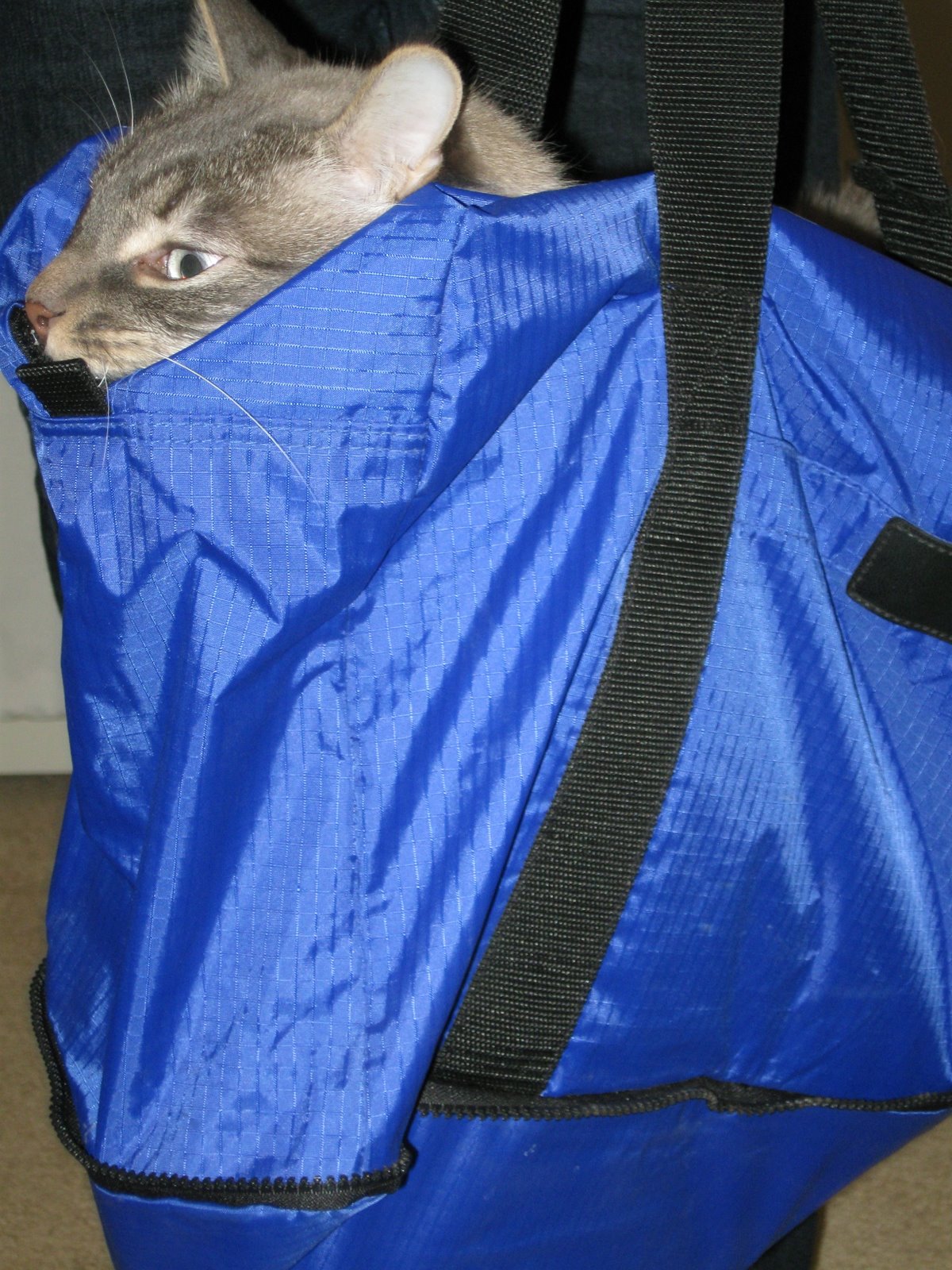
I promise, we’ll get to the permissible aggression–just not yet. First, we should exhaust [or at least explore] all alternative responses. Albert Ellis, who died on 24 July 2007 at the age of 93, was annoying as hell. Ask anyone who knew him, including the woman he lived with for 37 years, Janet Wolfe. Because he was a graduate of our program @ Columbia, he used to drop by and try to incite us to fury, mostly succeeding. Even so, I feel lucky to have sat in his presence. He is known as the father of Rational-Emotive Therapy, which [I now realize, having come to Epictetus via Tom Wolfe] is based almost entirely on Stoic philosophy. I shall paraphrase him closely [but you must imagination his whiny, nasal voice]: “We talk to ourselves in short, declarative sentences. We say, ‘I am a cat in a sack; and that is awful!’ That is not awful–it is only highly inconvenient.

As it happens, we were weighing Zanzibar, to calculate his proper dosage of flea & tick meds. He wasn’t in the sack 30 seconds. Also, despite the expression on his face in this picture, out of the 16 cats I have owned, he is the most laid-back, seemingly oblivious to the notion of humiliation. When Napster’s turn in the “sack-scale” came, he was, as usual, overcome with fear. Ruth–the 19-year-old, 5-pound Maine Coon–was soaking up BTUs under one of our few remaining incandescent lights; and because her weight has remained constant for almost two decades, she was spared the intrusion into her nap time. Now, be honest with yourself. Do you enjoy public weigh-ins? What gets up your nose about them? Realistically, only jockeys, pugillists and military personnel are likely to face the pain & suffering of job loss, in connection with avoirdupois. Let’s say your doctor hectors you, “If you don’t lose some weight, you’re going to die!” You can reply with the words of Epictetus: “When did I ever say I was immortal?” So good old Dr. Ellis would have you reason with your aroused amygdala, in the face of an impending weigh-in, “I may have put on a couple pounds; but that is not awful. It is only highly inconvenient.” Thus, you should experience less anger, dump less cortisol, and spare your body additional adipose deposits. [I must say, Albert was a trim fellow.]

As with this trivial example, so with much of life: the Stoics and their modern descendants, the Cognitive-Behavioral Theorists, would have us believe that the acting out of aggressive impulses can–and should–be avoided in most instances. We cannot control other people’s actions; but we can strive to control our own emotional reactions to them. My favorite adjunct professor would ask rhetorically, after making a seemingly absolute pronouncement, “Always?” and then answer his own question, either “Always,” or “Not always.” So, Epictetus, Tom Wolfe, and I would answer, as to whether we should always maintain our equanimity, “Not always.”

Oh, yay! We sometimes get to resort to violence! [“Cry ‘Havoc!’ and let slip the dogs of war.”] When? Epictetus offers one specific circumstance: one must never “ignore cries for help from a friend under assault from robbers.” Less specifically, he opines, “Just as a target is not set up in order to be missed, so evil is no natural part of the world’s design.” Hmm. That seems to cover alot of territory. Since we’re supposed to love and accept the “Natural,” but hate the “Unnatural,” anything any one of us finds “unnatural” could be considered “evil”; and we’re allowed to oppose it, with violence, if necessary. This is where Cows, Pigs, Wars & Witches would point out to our ancient Greco-Roman philosopher, that what is “unnatural” is largely a matter of geography. There is–and has been, since way before Epictetus was teaching–a variance in climates, native flora & fauna, and resulting folkways, that inform one’s beliefs as to what is “natural” and “unnatural.” We can’t all be Mediterraneans, ya know.

So, alas, we are back to “When in Rome, do as the Romans…unless you are Greek, and despise the Romans…” This is where ethologists point out, we evolved with an amygdala for a reason–to help us [and those within our reference group] survive. Sometimes, the amygdala is not simply “barking mad”–to be overruled by reason, cognitive reframing and Stoicism. Sometimes, the right thing to do is cry “Havoc!”

Leave a comment

Filed under body image, Epictetus said..., pro bono publico, reference group, stress and cortisol

You Bet Your Life


One summer day in Manhattan, young Dick Cavett saw Groucho Marx walking down the street, and overcame his shyness for long enough to blurt out, “Mr. Marx, I’m a big fan!” Without skipping a beat [according to Cavett, whose anecdote this is], Groucho replied, “On a day like this, I could use a big fan.” Well, I’m a big fan of Groucho’s, too. Hands up, if you ever saw an original broadcast [not some archival retrospective] of his iconic quiz show, “You Bet Your Life.” The least important aspect of the show was the actual quiz. It was all about Groucho’s gift for ad libs [many of which had to be edited out before broadcast] and the challenge to the contestants, “Say the secret ‘woid’ and win $100.” A stuffed duck with specs, mustache, and cigar [the forerunner of the Vlasic pickle stork] would drop down on a wire, to show the audience the random word whose utterance would earn far more than correct answers on the quiz. How like life, eh?

Well, the other word [besides the “penalty box” command] that our dog trainer had us choose for ourselves, was the “attack” command. It had to be–as opposed to Groucho’s secret word–unlikely to come up in normal conversation [and so inadvertantly “loose the dog of war”]. He suggested, therefore, that it be foreign. Each of us had to come up with something unique for our own dog, lest we launch the whole pack, while learning to use the command in class. You can just imagine, can’t you? “Bonzai!” “Tora! Tora! Tora!” Ours is the Japanese for “evil.” [You could look it up.]

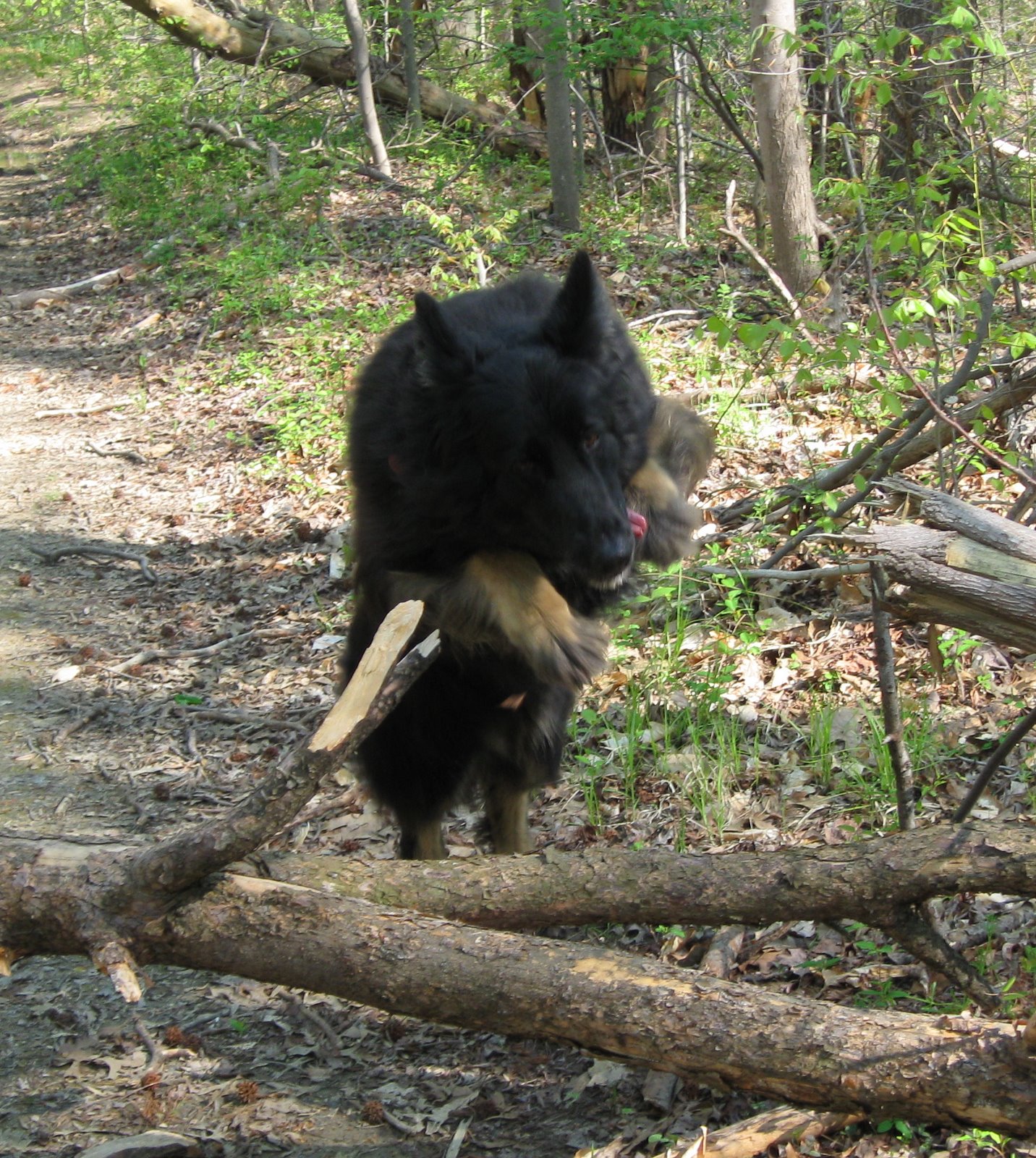
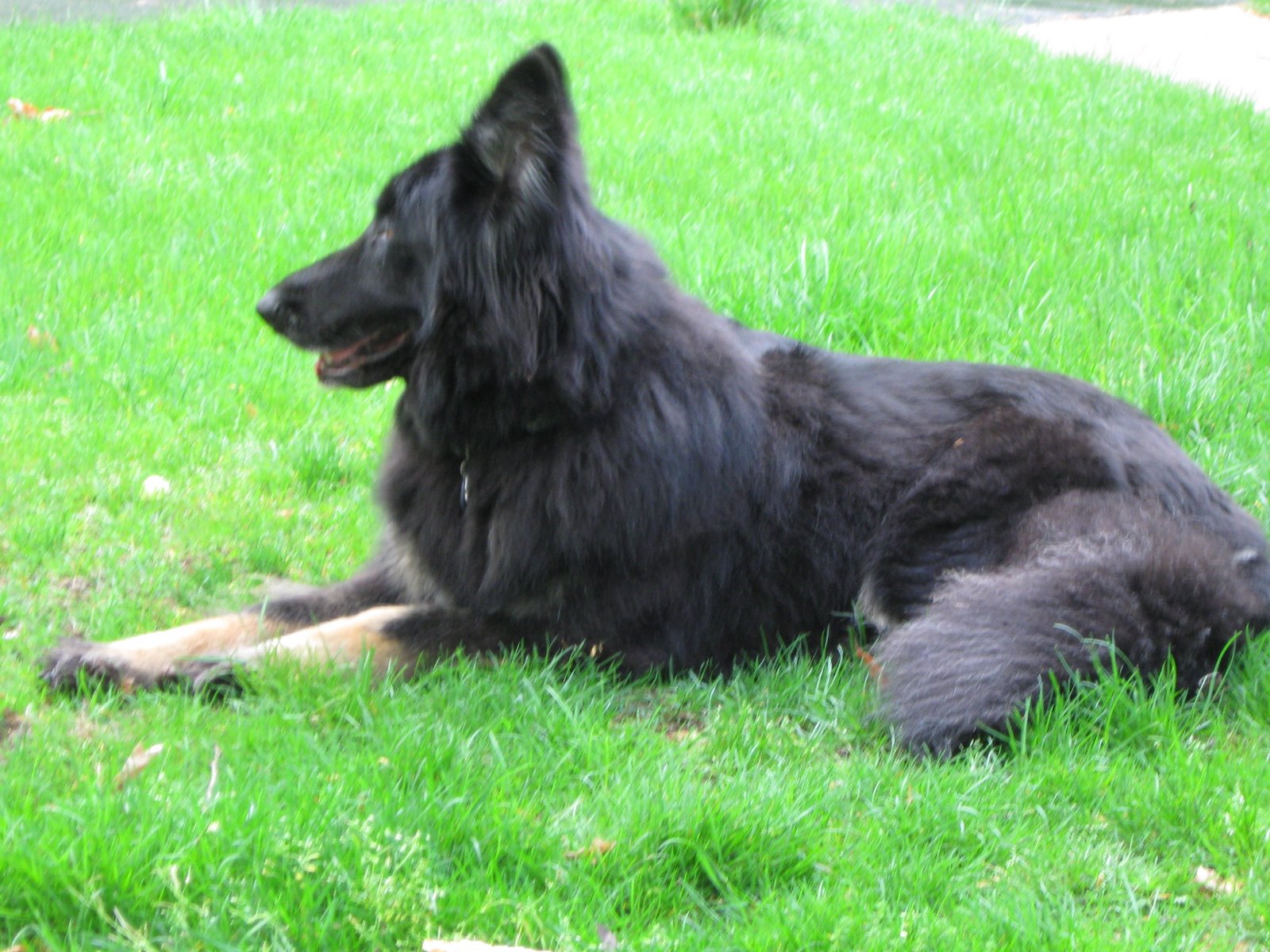
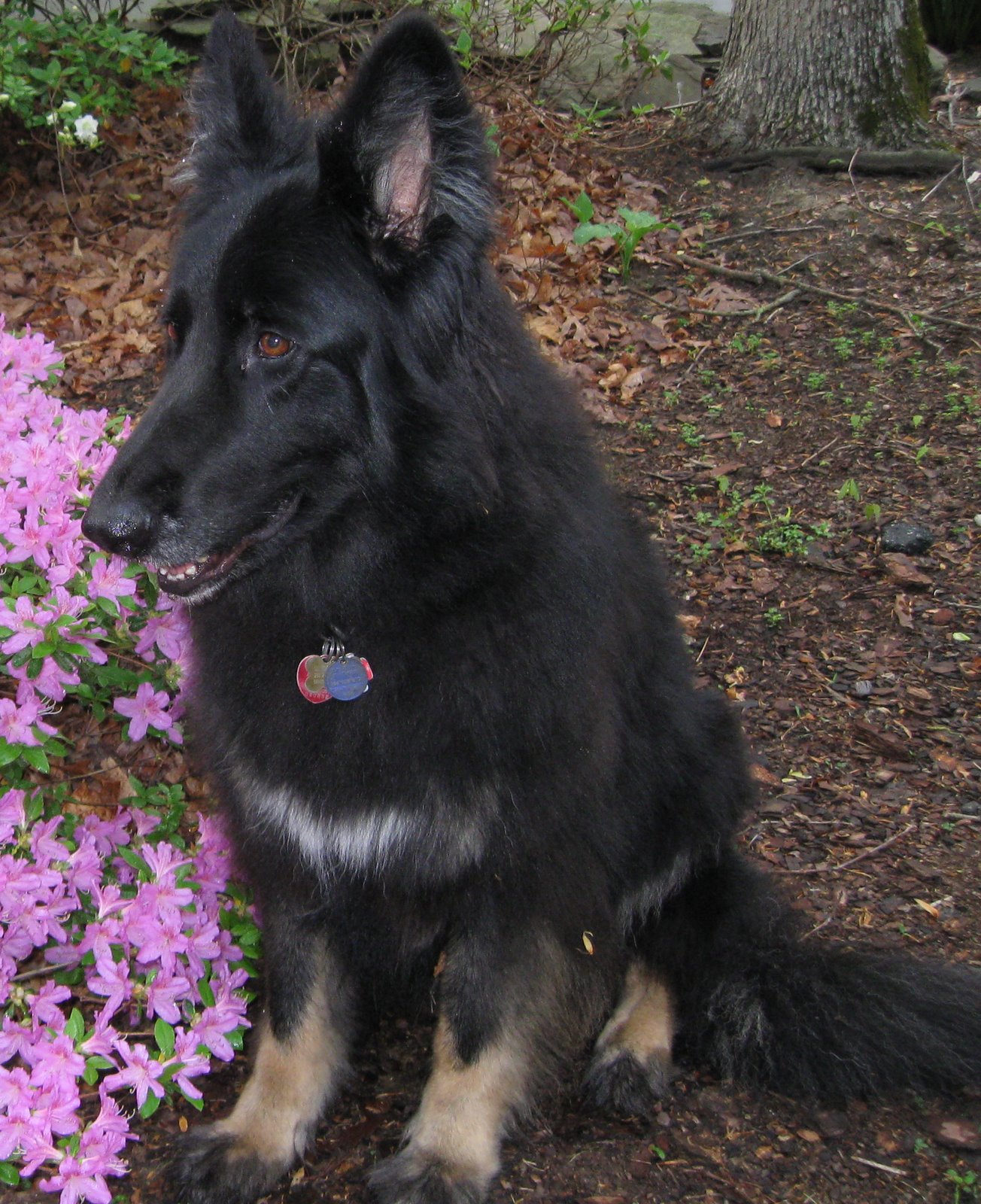
Like learning to use any weapon responsibly, this training was both technical and philosophical. I was appalled by the insouciant tone of the Drivers’ Ed our two kids received [one in Michigan, one in Maryland], compared to the lugubrious, required-course-in-high-school that my sister and I took in the 60s, where each class began with the call & response: “When you are driving a car, you are in charge of…” “A Lethal Weapon.” I felt compelled to invoke this reality check every time my kids took the wheel…still want to. Well, when we are out with Lili, we are…in charge of a Dangerous [if not Lethal] Weapon. We well and truly must “acknowledge our wolf,” if we are to keep everyone safe. As our trainer points out, dark dogs are usually perceived as male and more vicious than light-colored dogs. [Especially pointy-eared dogs, compared to Lab types.] This puts out a provocative subtext, which the dark-dog-owner must “own” and learn to manage, whatever the “truth” of the matter is.

Now, here’s the ironic thing about Lili. During Agitation Classes [where you learn to deploy the “attack” command] she was a Paper Tiger. The linebacker dude in the padded suit with the canvas “bite me” sleeve would mock-assault me, and Lili would either look away or try to hide behind me. Away from me–just dog-and-dude–her attack response was [eventually] evoked, and then paired with her secret word. She is no Stoic, our Lili. She would not come to the defense of the defenseless, unless she personally felt threatened. In this respect, her nature is all too human.

Lili is not my bodyguard [never thought I needed one, anyway]; but she is my character guide. As a recovering Paper Tiger, myself [“all bark and no bite,” as my husband has been known to describe me], I continue to challenge my hair-trigger amygdala, to see if my alarm in any given situation is exaggerated, or justified. Would I cry “Havoc!” and use aggressive means to defend myself or my family from a Very Bad Person, if all other options had failed? You bet your life.

Leave a comment

Filed under aggression happens, lesser of two evils, secret code

"Das ist nicht FAIR!"


My globe-trotting elder daughter brought me back a German dog journal, which made the transcontinental haul back from SoCal seem to “fly by”–despite a rowdy class of 8th-graders in the cheap seats, two screaming Pre-Ks in front of us, and an in-flight entertainment system on the fritz–as I brushed up my German vocab and translated the HundeTrendMagazin cover-to-cover. My favorite article, with the title as written above [last word in English], summarizes the recent research of Dr. Friederike Range @ the University of Vienna into Inequity Aversion in dogs. [You can read her article, in English, featuring 3 priceless pictures of the “striking” dog, @ http://www.nc.univie.ac.at/cognition-research/animals/dogs/projects. ] Before we get to her findings, she also is co-founder of the Wolf Science Center, whose website is: http://www.wolfscience.at/english/about_us/friederike_range.html. Check out how much “Shima” the Wolf looks like Lili.

So @ the Clever Dog Lab, two dogs who were buddies were seated side-by-side and each asked, “Gib Pfote!” [“Give me a paw!”] Sometimes the reward was a piece of sausage, and other times, a piece of bread. No difference in compliance was noted. Then the black & tan dog was given the bread, but the black & white was not. So, he went on strike: “Nicht mit mir” [“Not with me”] they captioned his averted-gaze body language. Earlier studies with primates had shown that even a distinction in the value of the treat–a cucumber chunk (meh) vs a grape (yum)–was enough to send the slighted monkey into a fury. Not only did he refuse to exchange a pebble for the treat, he threw both the cuke and the pebbles back at the trainer! The dog didn’t appear to get miffed until no treat of any kind was offered to him, while his buddy did get something.

This is a variation on the theme of the Zero-Sum-Game, where the trainer suddenly changes the rules in the middle of proceedings. We go from a day’s pay for a day’s work, to We’re-having-a-party-and-you’re-not-invited. Well, how would you feel? Correction–how have you felt? Who hasn’t been there, done that? They schmize you into believing your school or your job [or Britain’s Got Talent] is a meritocracy, and then they play favorites! All of a sudden, black & white is uncool, and black & tan is all that. In vain, you gave your paw with the same enthusiasm and reliability as your pal. He turns out to be the teacher’s pet! What’s up [your nose] with that?

At the very least, humiliation, innit? Probably also intrusion. The powers-that-be have taken away your rightful piece of bread and given it to old used-to-be-your-pal, Black & Tan, who looks set to scoff the whole loaf…which, if true, could lead to hunger [pain & suffering], or worse [fear]–starvation! So what do you do? If you’re a dog, you avert your gaze and keep all paws planted firmly on the ground. How tame! [Especially compared to the miffed monkey.] This is the canine version of a sit-down strike–a form of passive resistance [when Gandhi did it] or passive aggression [when a disgruntled employee does it].

The very phrase “disgruntled employee” conjures up images of humans who have decided to “Go Postal” and take revenge–not only on the invidious “(bread)-winner”–but on everyone within their line of sight. Dogs, it seems, are more Stoic than that. They simply refuse to perform tricks anymore for The Man.

Leave a comment

Filed under aggression happens, ethology, gets right up my nose, semiotics, zero-sum-gaming

The Lame Gazelle


Back in Manhattan, back in the day, when my acting friends and I were working on our “Not your victim, not your enemy” subtext schtick, there was an iconic TV documentary, with gory but memorable footage of cooperative hunting by African big cats at a (real) watering hole. How did those cats choose which animal from a herd to attack? No doubt to conserve Therbligs, they went after the lame gazelle. This image became our metaphor for how NOT to present oneself, whether in a Midtown watering hole or an Uptown subway train.

At the most concrete level, it meant not hobbling ourselves by wearing oh-so-high heels, if we were taking the Shoeleather Express any further than a waiting taxi. [Millenial women, I’m talking to you. Pack a pair of flats in your handbag, for a quick getaway.] This was a no-brainer for me, since I had gotten over the glamour of stilettos as a young teenager in London, when my heel wedged itself into the wooden tread of a Bakerloo escalator (8 years before my “Skaaf” escapade in Boston, yet).

At a more controversial level–in that Age of (alleged) Equality of the Sexes–it meant not trying to keep up with the lads, drink for drink, at the watering hole. The slightest unsteadiness on one’s feet, and the “prey” subtext is hard to override, whatever one’s actual state of inebriation. [Another good reason to leave the stilettos to fictional New Yorkers.] A glib remark–such as the British cliche, “Oopsie-daisy! Worse things happen at sea!”–helps, though, since it implies that one is not humiliated by one’s gait. It also is quaint and eccentric, implying that one might be a bit “Doo-lally” (crazy), which no self-respecting predator will pursue, if there is other fair game in sight. [Ethologists have speculated that this avoidance of erratically-behaving prey may have evolved as a protective mechanism against sinking one’s teeth into a rabid animal.] So, it is a fine line we walked–act crazy, not drunk–but we got the hang of it. As we had learned in acting school, actual drunks try very hard to appear sober and do everything more slowly than normal, whereas meshuggahs tend to do everything like a Marx brothers vaudeville routine.

One night, while co-starring in an Off Off Broadway production of Picnic in a theatre so bijou that it had no hot water, I decided to wait until I got home to take off my stage make-up. I was on the Uptown IRT local, getting [puzzling] predatory looks, when we went through a tunnel, which turned the train window into a mirror; and I saw my reflection. [Remember in the Disney cartoon, Aladdin, where the Robin Williams genie channels a Bravo-channel designer and asks our hero of his get-up, “Now, what are we saying?” A line much used in raising my two girls, I must say.] My subtext said either “female with low self-esteem” or “female impersonator.” To override these two subtexts, I addressed my fellow travelers in a loud, theatrical voice, “Hey, everybody! Did any of you catch our production of Picnic down in the Village tonight? We’re there all week!” The hunters averted their gaze. “She’s in a play,” they muttered to one another. “Yeah, yeah. Good for you, there, sweetheart. Break a leg.” No longer their potential victim…nor their enemy, unless I started spouting lines from the play.

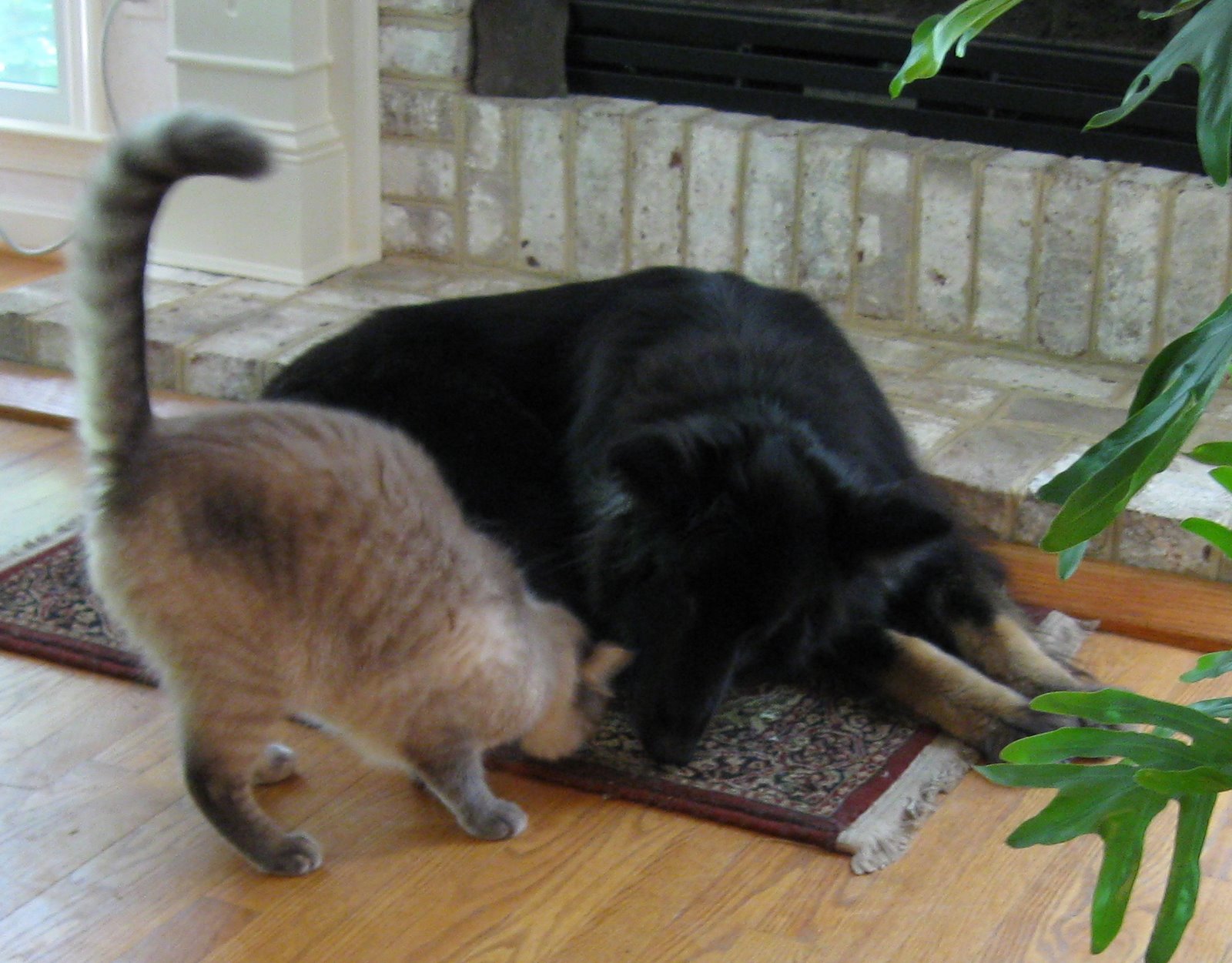
So, here is Ruth, giving you her impression of decrepitude. For going-on 20, she is quite spry, and still a good hunter. She allows herself to be included in the male cats’ horsing around, but just let Lili try to herd her, and you’ll see who’s whose victim. Although she is a purebred Maine Coon, she is all fur and bones, no weight at all! Still, her self-possession and longevity are a reminder to us all, “Don’t be the lame gazelle!”

Leave a comment

Filed under ethology, power subtext, semiotics, therbligs

Don’t Look Now


“Good eye contact” is entirely overrated. “Look at me when I’m talkin’ to you!” Why? What if I’m one of the 50% of people who process information auditorially, rather than visually, and looking at you just distracts me from what you’re saying? What if I grew up in another culture, where staring directly at my interlocutor [particularly one higher in the pecking order] is the height of bad manners? Even in our own military, when standing to Attention, one is taught to stare “into middle distance,” not into the eyes of the Big Wig addressing one, even when answering questions. In the Navy, it is called “keeping one’s eyes in the boat.” [One is also taught to speak in the third–not second–person: “Would the Admiral care for…?”]

And don’t get me started on prey animals–such as horses–one is handling. Direct eye contact is an amygdalar trigger, provoking “highly inconvenient” reactions, ranging from bolting away to charging the handler. [Remember the Spanish Riding School scenario? Probably started with a stare.] Seasoned stable lads [a unisex term], equine vets, and farriers know to avert their gaze when approaching a horse, as if it were a Roman Senator. [Trivia question: Which emperor was deposed for appointing his horse, Incitatus, a Consul?]

Predators know the fierce power of a direct stare, and use it strategically. Dog spies rabbit; fixes it with a stare; and rabbit [most likely] freezes, at least momentarily. Think back to the dog fights in Top Gun, where the prey jet is “painted” with the laser of the predator, indicating “I’ve got you in my sights now. You’re toast.” Back in the 1920s, before eye contact was considered an Altogether Good Thing, there was a New Yorker cartoon, with two women walking past a man in the street: “He gave me such a look!” The joke is that she is feigning indignation, while secretly enjoying being “in his sights.”

Let’s consider the hard-done-by black & white dog in Dr. Range’s experiment on Inequity Aversion. We know he is angry at the injustice of his pal [Black & Tan] continuing to receive a reward for giving a paw, while he gets bupkes, nowt, Nichts! He demonstrates his displeasure by going on strike [no longer giving his paw], and by averting his gaze–not just from Black & Tan, but also from the experimenter. What’s up with that? Here’s my theory. Like Conrad in the Santa Rita jail, he knows he is “just a number here,” and Black & Tan is “just a number here.” It is not really Black & Tan’s fault that The Man [a unisex term] is being arbitrary and unfair. His beef is actually with The Man, who is the established Pack Leader. [Remember, this is the Clever Dog Lab–ain’t no slow learners here.] Back in the world [as GIs used to say in ‘Nam], he would be able express his anger in a number of ways: attacking The Man [fight], high-tailing it out of there [flight], or going into the “suspended animation” state which Object Relations Theorists call Somnolent Detachment. Here, his options are limited. Attacking The Man is not a clever move, since the Pack Leader is the source of basic rations, not just treats. So, to lessen his temptation to do so, he avoids “fixing The Man in his sights.” If his amygdala is really ramped up, he may actually go into Somnolent Detachment. When human infants do this, they “stare right past” their caregiver, as if she weren’t even there.

This is Crazy-Like-a-Fox behavior: the lesser of two evils. “If you slight me, I’ll ignore you. You have more power than me, but you don’t own my spirit [soul, what have you].” It is a gutsy move, whether you are a clever dog at the University of Vienna, or a PoW near the River Kwai. One has to do it with enough dignity and Stoicism, NOT to be mistaken for a Lame Gazelle. This little dog’s sit-down strike and averted gaze carries the subtext message: “I am not your victim, but I am not your enemy.”

Leave a comment

Filed under Epictetus said..., ethology, lesser of two evils, limbic system, semiotics

"Tomodachi"


What’s your definition of friendship? Whom do you consider your peeps, your posse, your reference group? Think about who, by you, are “PLU” [a code acronym well-heeled British mothers used with their eligible offspring–often preceded by “not”–at public gatherings, to indicate that a would-be friend or suitor was…well, not suitable, not People Like Us]. To which their children replied [or thought], “Never mind the why or wherefore. Love can level rank…” It is a fictional motif that never grows old–from Shakespeare to Slumdog Millionaire.

How true is it, in real life? Do friendships and marriages last longer, when two individuals are similar “on many dimensions,” or when they are [to use a Cockney expression] “Chalk and cheese”? Most on-line match-making services are based on the premise that similarity breeds compatibility. “One of your own kind, stick to your own kind,” as her Latina friend sings to Maria in West Side Story. Otherwise, if you go with that Italian boy, it will all end in tears.

Pre-millenial sociological studies tended to support this view. Using factors such as Socio-economical status, education, faith tradition, and race, researchers found that the closer two people “matched,” the longer they stayed together. I think times have changed, but I don’t have the statistics to prove it.

Let’s go tight and inside [the brain], to formulate a theory of “peep-ness.” I had a patient in Detroit whose love life was full of drama and bad judgment, and who consequently spent long stretches of time on her own, except for “the comforting presence” of her Springer Spaniel, Bouncer. He “lowered her level of amygdalar arousal,” just by being near, welcoming her touch, and listening to her tell of her sorrows. Dogs, horses, and cats specialize in this; but humans can offer this “comforting presence” to one another, too. Some of us feel better in high-density living situations, just knowing [hearing] that neighbors are nearby. Some of us seek out membership in more than one reference group, so that if we feel slighted by one group or Special Individual, we can get a “second opinion” as to our okay-ness, later on that day, to neutralize the humiliation, pain & suffering, or even fear that rejection by Someone Whose Opinion Matters has aroused in us.

In dog training class, we were taught to use the Japanese word for friend–Tomodachi–to let our dog know that another [person, dog, what have you] was not to be feared or attacked. Lili and Zanzibar discovered for themselves that they were sympatico, with no cues from their owners.

Leave a comment

Filed under object relations theory, reference group, sharks and jets

Risky Menschlichkeit


Sounds like the wheelman for Meyer Lansky, no? Mensch is a Metalingual minefield, having come full circle, to mean its exact opposite, even after you tiptoe through the “Man/Mankind” lunar dust. In German, it originally meant “a man,” whereas in Yiddish it means “a standup guy” [a unisex term]. Nowadays, Menschlich has come to mean either “humane” or “all-too-human, warts and all.” A vignette from my 1988 visit to Vienna: I was walking through a U-Bahn station when I saw a young woman with a baby buggy, poised at the top of a flight of stairs, like the opening scene from Battleship Potemkin. I rushed up to help her carry the buggy down the stairs, when an old woman began shrieking, “Schade! Schade!” [“Shame! Shame!”] Who the hell was she angry at? Did she think I was trying to kidnap the baby? “Wo sind die Menschen?” she asked, rhetorically. [“Where are the men?” or possibly, “Where are the standup guys?”] “Wir sind die Menschen!” I quipped [“We are the standup ‘guys.'”]; and the young woman shook my hand, in the formal manner of pre-millienal Viennese young people, before high-fiving went global.

Although it all ended with smiles, it could have been just another instance of “No good deed goes unpunished.” As a Social Science major in the 1960s, I was familiar with the admonitory tale [perhaps urban legend, if you read modern critiques] of Kitty Genovese, who was mortally attacked over a 3-hour period outside her apartment complex in Queens, NY, while 38 of her neighbors [allegedly] “did nothing.” Even if the real story is less black & white, it became the anecdotal evidence for the theory of Diffusion of Responsibility: the more onlookers to a calamity, the less likely any one of them is, to do the standup thing and try to help. Phil Ochs even wrote a song about it, Outside of a Small Circle of Friends, with the tag line, “Maybe we should call the cops and try to stop the pain; but Monopoly is so much fun, I’d hate to blow the game.”

So, what prompts anyone to perform an act of Menschlichkeit, like Wesley Autrey, the subway hero, who jumped to the aid of a stranger who had fallen onto the tracks as a train approached, and covered the stranger’s body with his own, as the train passed over them both? Did Wesley just have a broader definition of who was in his “Small Circle of Friends,” than the other folks on the platform? Some put it down to his Naval service, that he had been trained to [override his amygdalar freeze mode, let his hippocampus problem-solve, and so…] “act bravely and quickly.” I’ll go for that; but I know lots of fellow Naval veterans who would have averted their gaze and stayed on the platform [the other definition of Menschlichkeit]. If it hadn’t worked out so well for Wesley and the stranger, I bet it would have been reported as a double suicide.

One of my favorite aphorisms is “It’s not ‘brave,’ unless you’re scared.” [It’s just bad judgment.] There was a time 1970s Manhattan when there had been so many murders of taxi drivers [who knows why], that a cabbie put a now-famous sign on the passenger side of his plexiglass barrier saying “Though thou shalt kill me…” It made New Yorkers–even those of us who rarely had the price of cabfare–realize what Menschen [the unisex, heroic term] cab drivers were, years before the hit TV series.

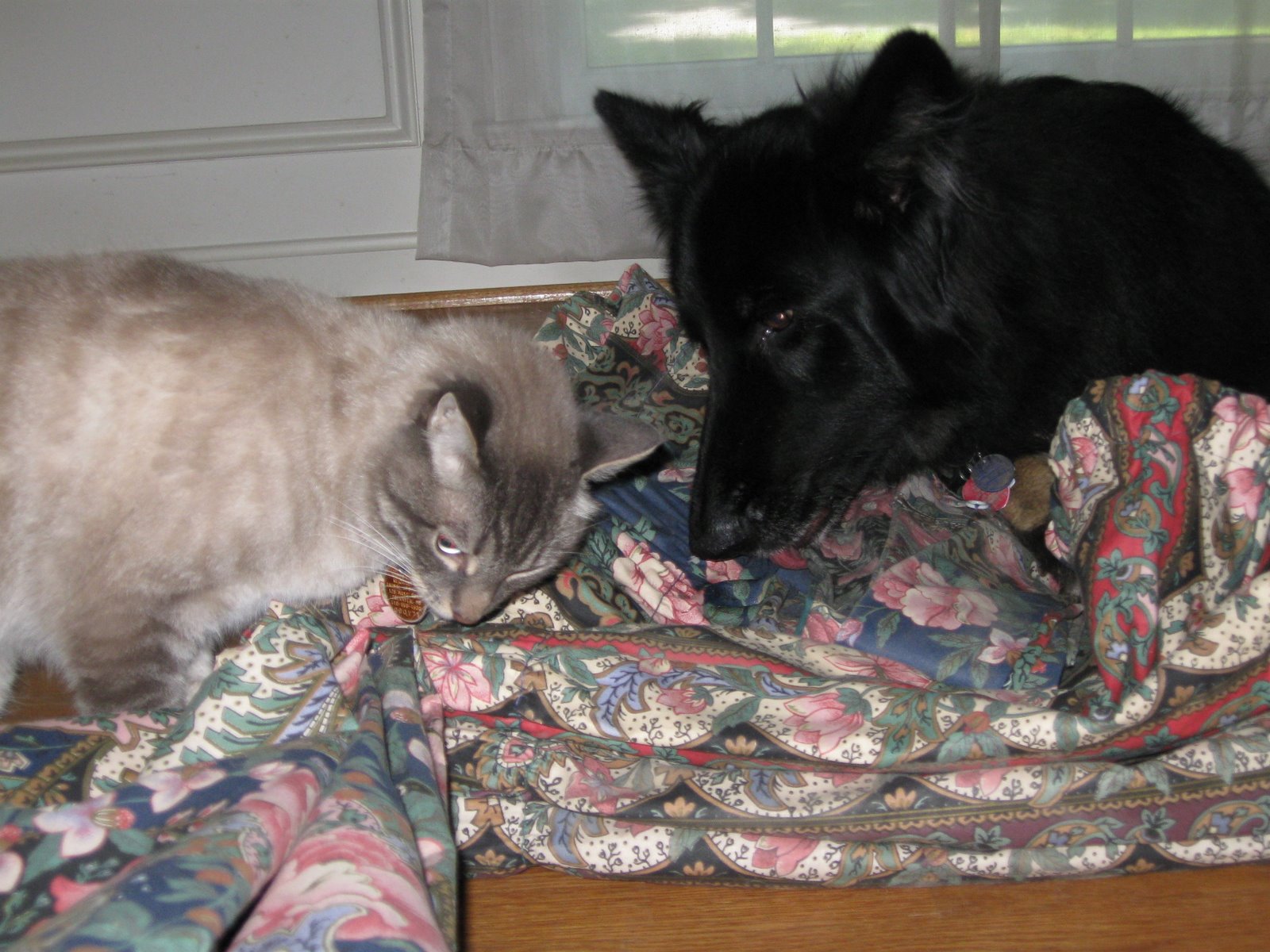
So, how Menschlich are you? Would you be willing, like Zanzibar the cat, to take a good, close look at “the wolf”? It might not be the “comforting presence” it seems to be for Zanzibar; but it’s still worth getting to know.

Leave a comment

Filed under pro bono publico, reference group, sharks and jets

"Hidden Idiot"


Back in the early 60s, when a computer took up a big room, a family friend of ours was working on a subset of Artificial Intelligence called Machine Translation, between English and Russian. (Quelle surprise!) With formal speech, it did well enough; but it “choked” on idioms, such as “Out of sight, out of mind” [which it rendered “hidden idiot”]. Even as a kid, I took exception to the linguistic inference that being out of one’s mind was the same as being an idiot. [Surely, that would be “out of brain”?]

Let’s consider the aphorism, itself: “Out of sight, out of mind.” Piaget and his followers did clever experiments to demonstrate at what age a child develops Object Constancy–the belief in Things Unseen [such as a high value treat, first out there in plain sight, then covered up by a cup]. Until this cognitive stage is reached, life is one big magic show, where objects randomly appear and disappear. [For some of us, the magic show is still in town, featuring tricks with our keys.] [If you are Irish, you realize that the Fairies have taken your keys; and that They will return them, in Their own good time.] A game which is thought to hasten the development of Object Constancy involves a Kindly Grownup pretending to vanish behind a handkerchief, and then suddenly reappearing, with the incantation “Peek-a-Boo!” Playing the game too soon in a baby’s cognitive life is likely to provoke tears of fear–sometimes at the “disappearance,” sometimes at the “reappearance.” It becomes clear that the kid “gets it,” when he puts on his own magic show, by “hiding his eyes” with his hands and saying the magic words. What is less clear is whether he thinks he has made you, or himself, vanish. The first is just dumb [but we do it all the time–it’s called denial]. The second is just crazy [except when Irish grownups do it–and it’s called magical thinking].

Magical thinking, of course, is an accepted part of many other cultures. Think voodoo, think bending spoons with your mind, think predicting [or causing] the next card to be dealt at BlackJack. It’s not an Altogether Bad Thing. It often gives us the courage to attempt risky [but necessary] endeavors, such as to fly jets [where it’s called “The Right Stuff”] or to run into burning buildings [where it’s called Fire Fighting]. It also, alas, gives teenagers and young adults carte blanche to engage in all manner of hare-brained and hair-raising activities, because of a belief in their immortality. “The laws of physics, logic, and probability do not apply to me.”

Pseudocyesis [false pregnancy] is often attributed to magical thinking [even though it occurs frequently in dogs, cats, horses, and goats]; whereas its opposite–pregnancy denial–is, so far, documented only in humans. In either case, the body mimics most of the signs and symptoms of the desired condition–whether that is to be with, or without, child. A bizarre case of the latter is in the news this week, in which a “caring mother” of two teenage boys has now confessed to the killing at birth of 3 subsequent babies [two of whose corpses she stored in the family’s deep freeze], allegedly without her husband’s knowledge of any of it. How could he be unaware of her pregnancies? She “didn’t show.” I can just about buy that. There is medical precedent. How could she maintain the persona of a “normal” wife and mother for 4 years, knowing that she had stashed the incriminating evidence right in their house? My guess is that she used a combination of denial and magical thinking. There is no jury, but the judge’s verdict is still “out,” as to how culpable this woman is. Astonishingly to me, her husband has already been exonerated. Infuriatingly to me, he admonished the judge, “You should not try to understand us.”

The fact is, we all use denial [Do you fly? Do you drive a car? Do you drink water?]; and most of us use magical thinking. [If I promise to donate $20 to the SPCA, Napster will come home.] At the brain level, I believe that both defenses are useful in calming amygdalar alarm [but at the cost of reality testing]. Sometimes, that cost is very high.

Incidentally, the “hidden idiot” in the picture is not Lili. It is myself, hiding behind the tree on her right. [See my sleeve?] As readers of the post “Crazy Like a Fox” will know, I was anything but “out of [Lili’s] mind,” as she launched herself up the hill to find me. Unlike the woman in the news story, Lili has a highly developed sense of Object Constancy, and knew I was just playing “Peek-a-Boo” with her.

Leave a comment

Filed under magical thinking, object relations theory